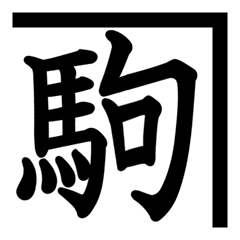
Kanekoma
Higonokami folding knives - Shirogami, Aogami or VG-10 steel, handmade assembly in Miki
Last authorized Higonokami maker out of 40 originally. Five generations since 1894, exclusive trademark since 1910. Buying a real Higonokami means supporting the survival of Japanese artisanal heritage.
Philosophy
Absolute design minimalism - one blade, one brass handle, one friction mechanism - is Kanekoma's credo. The workshop preserves Higonokami tradition as it has existed since the Meiji era, while still introducing contemporary models.
History
In 1894, Komataro Nagao founded his workshop in Miki, Hyogo Prefecture. At the time, Miki was the historic center of Japanese cutlery, renowned since the 16th century for smiths who supplied feudal armies with blades. Production was entirely manual: five to eight knives per craftsman per day.
Two years later, the Higonokami was born. A friction folder of absolute simplicity: a carbon steel blade, a folded brass handle, and a thumb lever - the chikiri - for opening. No spring, no lock. The name came from Kumamoto, the former province of Higo, where wholesaler Tasaburo Shigematsu's first customers came from after he commissioned this new pocket-knife model.
The context of that birth was unusual. In 1876, the Haitorei decree banned samurai from carrying swords. Hundreds of smiths specialized in blade forging suddenly lost their market and shifted to utility cutlery. Higonokami quickly became Japan's everyday knife: for schoolchildren, craftsmen, farmers, office workers. A Japanese equivalent of the Opinel.
In 1899, makers created the Higonokami Knife Union. At its peak, 40 workshops and more than 200 artisans produced these knives in Miki. In 1910, as poor counterfeits flooded the market, the "Higonokami" trademark was officially registered. Its use was then reserved for members of the Miki cutlers' association.
In 1911, Crown Prince Yoshihito - the future Emperor Taisho - bought a Higonokami at the First Kobe Export Articles Exhibition. That imperial purchase gave the knife considerable prestige across the country.
Decline came in the middle of the 20th century. Competition from industrial utility knives, then the 1961 law on bladed weapons, dealt a fatal blow. Schoolchildren, once the main customer base, could no longer carry Higonokami at school. Workshops closed one after another.
Today, only one remains: Kanekoma, led by Mitsuo Nagao, fifth generation. He is the last craftsman in the world authorized to stamp his knives with the Higonokami name. Every blade is hand-forged in the Miki workshop, in Shirogami, Aogami, or VG-10 steel, and heat-treated individually. The classic design has not changed since the Meiji era: one blade, one brass handle, no locking mechanism. In 2021, the workshop became a formal company under the name Nagao Kanekoma Factory Co., Ltd. The price remains strikingly low for a knife fully forged and assembled by hand in Japan: starting around fifteen euros.
Iconic Products
Higonokami Shirogami (White Steel)
Modele classique en acier blanc - tranchant exceptionnel, manche laiton, design inchange depuis l'ere Meiji.
Higonokami Aogami (Blue Steel)
Version en acier bleu - meilleure retention de fil, pour les utilisateurs exigeants.
Higonokami VG-10
Version inoxydable moderne avec manche inox chrome et verrou a vis - evolution contemporaine du design classique.