Saint-Héand, Loire. Population 4,000, a small town nestled against the Monts du Forez, somewhere between Saint-Étienne and the clouds. Nothing suggests that here, behind the walls of a factory with no flashy signage, they make the eyes of world cinema.
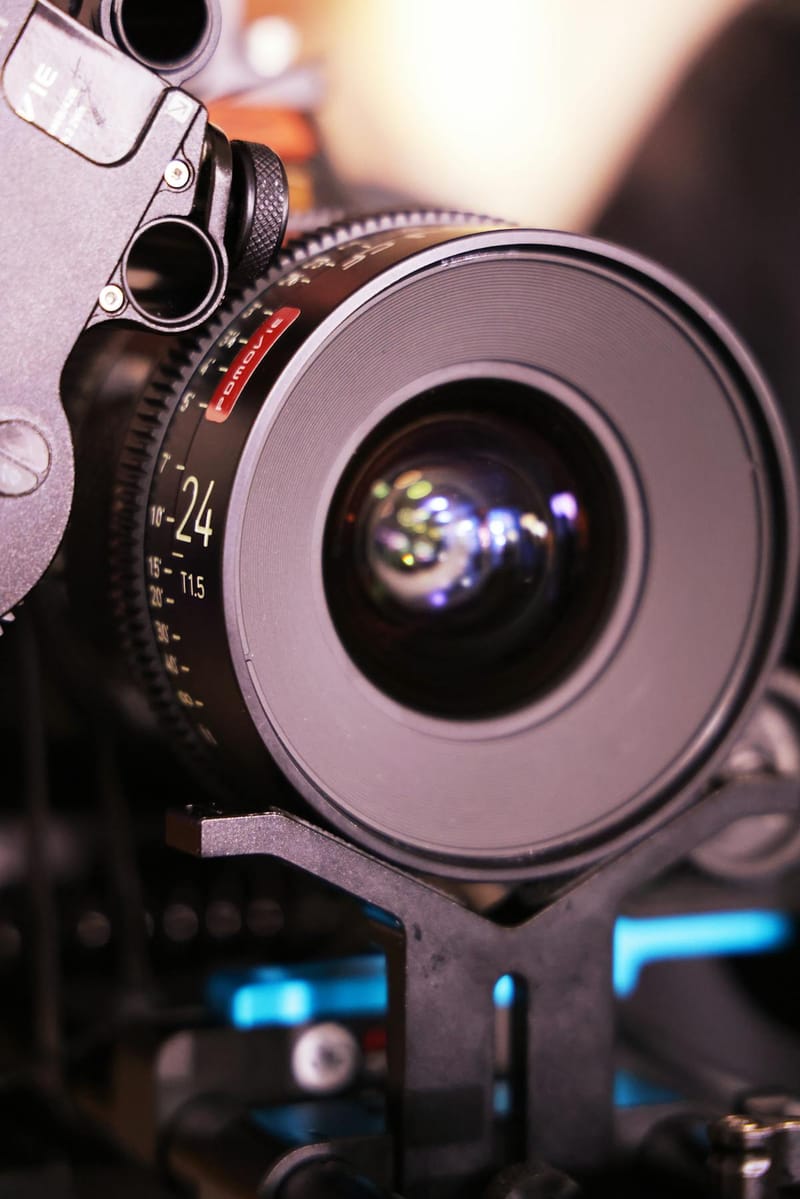
Angénieux lenses. The ones that filmed the first steps on the Moon. The ones Scorsese mounted on his cameras for The Irishman. The ones used on the sets of Emily in Paris as well as on the most demanding arthouse shoots. Steel and glass cylinders, assembled by hand, sold for between 10,000 and 100,000 euros each.
And almost nobody has ever heard of them.
The inventor who did not patent his revolution
Pierre Angénieux was born in 1907 in Saint-Héand. An optical engineer, son of this industrious Loire region that also gave birth to ribbon-making and armaments, he founded Les Établissements Pierre Angénieux in 1935. In his native village. He would never leave.
In 1950, he invented the Retrofocus. A wide-angle optical system that would make possible the development of every 35mm SLR camera body in the world. The kind of breakthrough that changes an entire industry. The kind of breakthrough, too, that Pierre Angénieux would not patent. He regretted it for the rest of his life.
Three years later, he designed the largest-aperture lens ever made: an f/0.95 that doubled the amount of light captured compared to the best competitors. It was a monster of optical calculation. And it was only the beginning.
1956: the first mechanically compensated zoom lens. Before it, changing focal length during a shoot meant changing the lens. Angénieux made continuous movement possible. No more cuts. No more forced shot changes. The zoom transformed the language of cinema and television in a single mechanical gesture.
The “Hollywood Zoom” and the Oscars
The 25-250mm arrived in 1962. The Americans nicknamed it the “Hollywood Zoom.” In 1964, it received the Academy Scientific & Engineering Award. Not an Oscar for a film. An Oscar for a tool. The distinction matters: Hollywood was not rewarding a performance, but a capability. The capability to see differently.
That same year, the Ranger 7 probe photographed the lunar surface for the first time. The lens mounted on the RCA camera was an Angénieux 25mm f/0.95. Five years later, on July 20, 1969, Neil Armstrong set foot on the Moon. The images the entire world watched in fascination were captured through optics made in Saint-Héand.
A village in the Loire that filmed the Moon. You would have to invent it if it were not true.
In 1989, Pierre Angénieux received the Gordon E. Sawyer Award, the highest technical honor from the Academy of Motion Picture Arts and Sciences, for his lifetime contributions to the film industry. He was 82.
In 2009, a third technical Oscar: the Optimo 28-76mm and 15-40mm received the Scientific and Engineering Award in turn. Three Oscars for Saint-Héand. Pierre Angénieux would not see it: he died in 1998, in his village, a few hundred meters from the factory that bears his name.
Thales, the quiet backing
In 1993, the company was acquired by the Thales group. The word “acquisition” often raises hackles in these pages. Here, some nuance is needed. Angénieux was not swallowed up. The site remains in Saint-Héand. The brand remains Angénieux. Manufacturing stays entirely on-site.
In 2017, the legal entity Thales Angénieux SA was merged into Thales Land & Air Systems. On paper, the company vanished. In practice, the workshops keep running, the opticians keep polishing, the lenses keep shipping. The last revenue figure published under the standalone entity: 67 million euros in 2016. For a few hundred lenses a year, that is a per-unit revenue that would make many a Swiss watchmaker pale.
400 people, one site, everything in-house
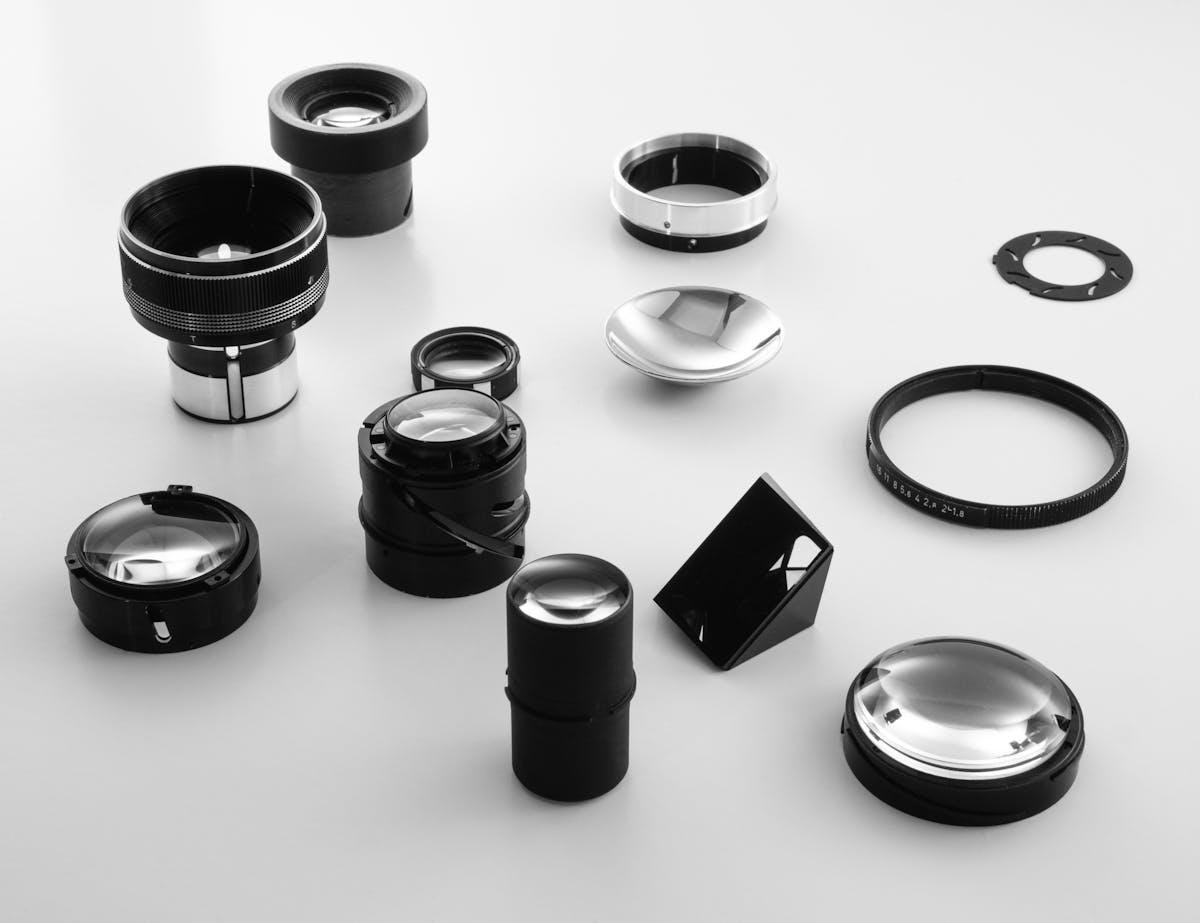
What sets Angénieux apart is integration. Everything is done in Saint-Héand. 400 employees. The machine shops mill the aluminum barrels and focus rings. Optical glass polishing is done on-site. Assembly is manual. Quality control is obsessive.
Christophe Remontet, director of Angénieux, describes the house’s optical signature as “a blend of image softness and very high resolution.” This is not jargon. It is exactly what directors of photography from around the world come looking for.
There is a word professionals use to describe the Angénieux look: “creamy.” A smooth, delicate roll-off, cinematic flares, rich and warm skin tones. Far from the surgical sharpness of a Zeiss or the clinical precision of a Canon. The Angénieux does not cut the image. It wraps it.
The company has developed its own manufacturing tools. Not out of vanity. Out of necessity. When you produce zooms whose every optical element must travel with micron precision over several centimeters, off-the-shelf machines simply will not do.
The Optimo: the lens that changed digital cinema
In 2001, Angénieux launched the Optimo 24-290mm T2.8. A 12x zoom covering nearly all the needs of a shoot in a single barrel. Directors of photography describe it as “a set of prime lenses in a single housing.” Not a compromise. A feat.
The Optimo became the benchmark of digital cinema. Its optical rendering, combined with the versatility of a wide-to-telephoto zoom, made it the tool of choice for major productions. On professional forums, the discussion is never “should I get an Angénieux?” but “which one?”
In 2019, Angénieux announced the Optimo Primes. Their first full-frame prime lens series in fifty years. The innovation this time is called IRO, for Interchangeable Rear Optics: a system of swappable rear modules that lets you alter the optical rendering of a single lens. Shift from a vintage look to a contemporary one by changing a single component. The idea is brilliant, and quintessentially Angénieux: giving the director of photography more control, not less.
Cannes, the Oscars, and discretion
Since 2013, Angénieux has presented the Pierre Angénieux ExcelLens in Cinematography award each year at the Festival de Cannes. Roger Deakins in 2015. Christopher Doyle in 2017. Edward Lachman in 2018. Santosh Sivan in 2024. These are not household names. They are the directors of photography who have defined the gaze of contemporary cinema.
The list of recent films shot with Angénieux optics is staggering. The Whale, Best Actor Oscar 2023. Notre-Dame Brûle by Jean-Jacques Annaud. The Irishman by Scorsese, shot with the Optimo 24-290mm. Train Dreams, 2026 Oscar winner, filmed with the new Optimo Ultra 12x by director of photography Adolpho Veloso.
One could cite the often-quoted figure of 85% of the world’s films shot with Angénieux zooms. The percentage may be overstated. What is not is the dominance. On a professional set, when there is a zoom, there is a very good chance it came from Saint-Héand.
Against Zeiss, Cooke, Canon, and Fujinon, Angénieux occupies a singular position. Not the biggest. Not the cheapest. But the one whose rendering is instantly recognizable. Zhao Longlong, a Chinese director of photography, speaks of “sharpness without excess” and skin tones that are “rich and warm.” That is exactly it. The Angénieux does not show everything. It shows just enough.
What this story tells us
Angénieux is present in 48 countries. The Thales commercial network distributes the lenses across every continent. But everything starts in Saint-Héand. Everything comes back to Saint-Héand.
There is something deeply French about this story. Not the “Made in France” slapped on labels to justify a price. The real thing. An engineer who invents in his village, stays there, dies there. A factory that makes everything in-house because nobody else knows how. A product so good that the whole world comes to find it, without the manufacturer ever needing to advertise.
Pierre Angénieux did not patent the Retrofocus. He did not offshore production. He did not sell to the highest bidder. He made the finest lenses in the world in a town of 4,000, and the town carries on.
Next time you watch a film at the cinema, think about it. There is a good chance the image you see passed through glass polished in the Loire, assembled by hands that know every micron of their trajectory.
Saint-Héand does not appear in any travel guide. But the whole world sees through its eyes.