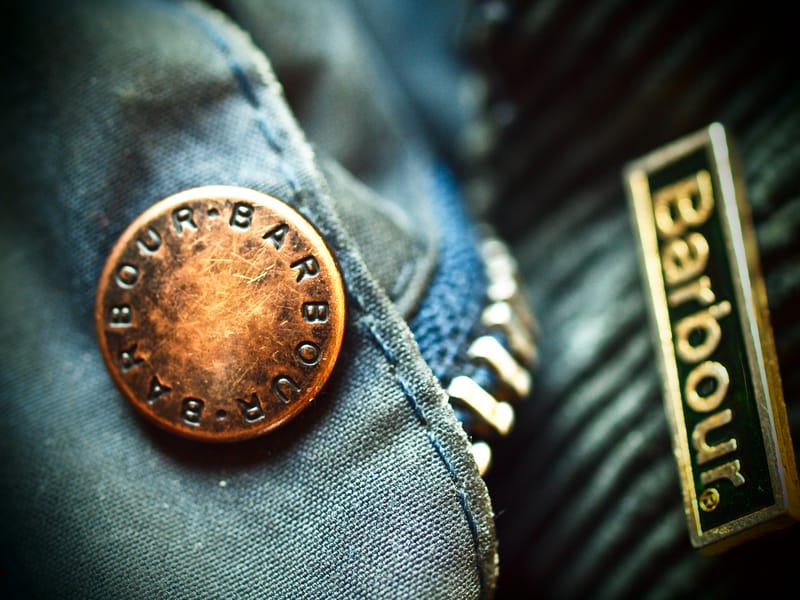
There is a smell in the Simonside factory, in South Shields. A blend of waxed cotton, warm paraffin, and damp earth embedded in the seams. It is the smell of 60,000 jackets that come back every year to be re-waxed. Not thrown away. Not replaced. Sent home.
Barbour does not just make jackets. Barbour takes them back.
The port, the sailors, and the wax
The story begins in 1894 at the Market Place in South Shields, in the North East of England. John Barbour opens a shop to supply oilskins to the sailors, fishermen, and dockers of the port. Oil-coated cotton, waterproof, cheap. Nothing noble. Workwear for men who got drenched.
By 1908, the clientele widens. Farmers, shepherds, landowners. The waxed canvas moves from the decks of trawlers to the hills of Northumberland. The product stays the same: a barrier between man and rain.
Then comes Malcolm Barbour. In 1921, he introduces a re-waxing and repair service. The idea is simple. The wax wears off, the cotton tires, but the jacket holds. Rather than sell a new one, you restore the old one. This is the founding gesture. Everything that follows - the Wax for Life programme, the Re-Loved line, the sustainability narrative - it all starts here. With a man who thought: if the jacket can still serve, we keep it.
Five generations, still the same family
Barbour has remained family-owned. Five generations. Dame Margaret Barbour chairs the company. Her daughter Helen is vice-chair. The succession has never been interrupted, never diluted by a private equity fund.
This has become exceptional. In British fashion, centenary brands that have not changed hands can be counted on one hand. The rest have been bought, restructured, offshored. The name stayed, the leather was swapped for synthetic, and the original factory became a concept store.
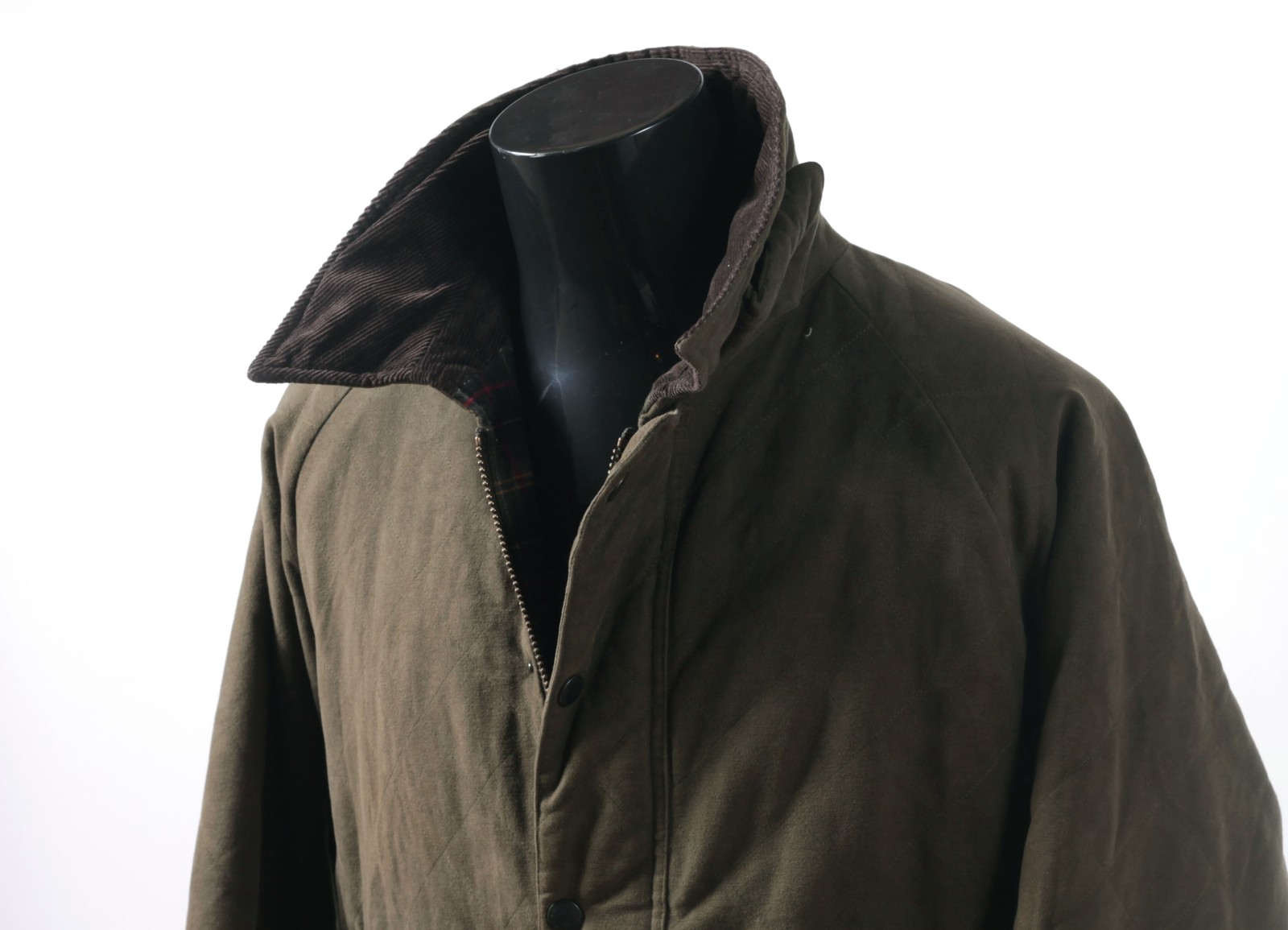
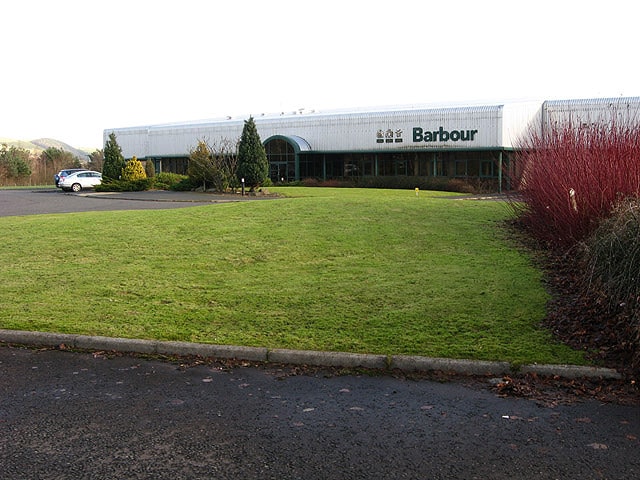
Barbour still makes its Bedale and Beaufort jackets by hand, in the Simonside factory. South Shields is not a backdrop. It is the workshop.
Wax for Life: the programme that changes everything
In 2019, Barbour formalises under the name Wax for Life three services that had existed in one form or another for a century.
Re-Wax. The customer sends in their jacket. It is cleaned, re-waxed, sent back. Cost: from £35. Less than 10% of the price of a new jacket. The consensus among users is unanimous: it is worth it.
Repair & Re-Wax. Same thing, with repair of tears, loose stitching, broken zips. More than 70,000 jackets are sent back each year to be repaired, re-waxed, or adjusted. Some come back every two or three years, like a check-up at the doctor’s.
Re-Loved. The customer returns a worn jacket. They receive an £80 voucher. The jacket is washed, repaired, resold. Three categories: Re-Loved Classic for standard models, Supa Re-Loved for customised pieces with contrasting patches, and Re-Loved Collectables for vintage jackets over 30 years old, sometimes still bearing the Royal Warrants of their era.
The programme is not a marketing gesture grafted onto a CSR press release. It is a century-old service put in a box. The difference is fundamental.
The arithmetic of durability
The numbers tell a counter-intuitive story. Barbour repairs its own products, extends their lifespan, encourages the second-hand market, and yet the company grows.
Revenue 2024-2025: £350.8 million, up 9% on the previous year. Pre-tax profit: £55.5 million, compared with £45.8 million a year earlier. Net profit: £40.4 million. Operating profit up 14.1%.
Steve Buck, the managing director, speaks of “the continued strength of our brands against a complex global backdrop.” The language is corporate, the figures are not. In a fashion sector where growth is begged for through ephemeral collaborations and Instagram drops, Barbour advances with a model that says: buy less, keep longer, come back to us when the wax has turned.
More than 100,000 tins of wax sold every year to customers who maintain their jackets themselves. This is not a side product. It is the sign of a relationship that does not end at the till.
The debate: DIY or send it in?
There are two schools of thought. The home-kit advocates, who slather their Bedale in the garage with a hairdryer and a tin of Thornproof Dressing. And those who send it to South Shields.
Barbour’s own sales staff recommend the professional service. Home re-waxing, when done badly, leaves marks, uneven patches, a sticky texture. The professional result is more consistent, more durable.
The criticism comes up often: the turnaround time. Two months or more by post, with little communication during the wait. You send your jacket in October, you get it back in December. If it is the only waxed jacket in the wardrobe, plan ahead. A few customers also report that repairs do not always cover every bit of damage in a single go.
But nobody disputes the result. The jacket comes back as good as new, or close to it. And for £35, it is the best investment you can make in a garment you already own.
The Royal Warrants and quiet prestige
Three Royal Warrants. Prince Philip in 1974, the Queen in 1982, Prince Charles in 1987. Barbour is one of the few suppliers to have accumulated all three. This is not folklore: a Royal Warrant is a real, verified, renewable supply contract.
But Barbour does not make it a loud selling point. The brand is sold in more than 55 countries, worn by Yorkshire farmers and Japanese students in Shimokitazawa alike. The Royal Warrant is there, discreet, on the inside label. Those who know, look for it.
A jacket you pass on
There is one word that comes up in every forum, every article, every conversation about Barbour: “heritage.” Not in the marketing sense. In the literal sense. Jackets pass from parent to child. The father gives his Beaufort to his son when it becomes too small for him, or when he buys a new one. The son sends it to Barbour, has it re-waxed, and wears it for another ten years.
This is the virtuous circle that the fashion industry cannot replicate. Or rather, has no interest in replicating. When a garment lasts thirty years, you sell one instead of five. The model only works if the margin is elsewhere. At Barbour, it lies in volume (the brand is far from niche), in exports (55 countries), and in the absolute loyalty of customers who return, year after year, tin of wax or repair slip in hand.
Barbour is also investing in expanding the South Shields factory to meet growing demand, both for waxed jackets and for the Wax for Life and new Quilt for Life services. The production facility is growing. Not to produce faster, but to repair more.
Perhaps that is real luxury. Not the price. Not the logo. The certainty that what you buy today will still be there in twenty years, and that someone, somewhere in South Shields, will know how to restore it.