There’s a corner of the internet where nobody talks about sales, deals, or the latest trendy gadget. On r/BuyItForLife, a subreddit with over two million subscribers, people share photos of things that last. A 25-year-old backpack still in perfect shape. A pair of boots resoled four times. A cast iron pot inherited from a grandmother. The principle fits into four letters: BIFL. Buy It For Life. Buy once, keep forever.
This isn’t an article about minimalism. Nor about ecology, though both benefit. It’s an article about quality. About that very particular pleasure of using an object that ages better than you do. That develops a patina instead of falling apart. That tells a story instead of ending up in a bin bag.
Here are 12 objects, 12 categories, all featured in the sulkowski.fr guide. From a €15 knife to a €2,000 bicycle. Proof that “buying well” doesn’t necessarily mean “buying expensive” — but always means “buying just once.”
The pocket knife — Opinel N°8 (~€15)
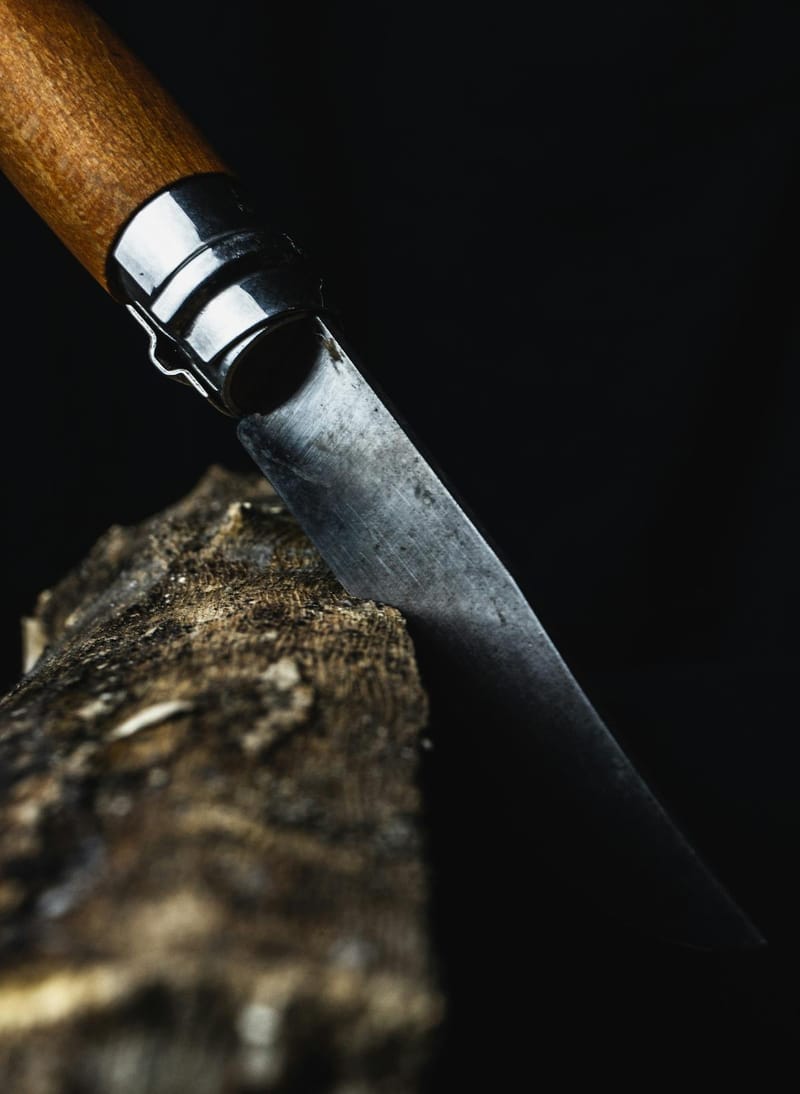
If BIFL had a mascot, it would probably be an Opinel. Not because it’s the most sophisticated knife in the world — it isn’t — but because it embodies the idea with almost absurd purity: a beech handle, a steel blade, a locking mechanism (the Virobloc, patented in 1955), and that’s it.
Joseph Opinel forged his first knife in 1890 in Albiez-le-Vieux, in the Savoie region. To this day, production remains in Chambéry. The N°8 is the universal format: large enough to slice saucisson, small enough to fit in a pocket. The carbon blade develops a blue-grey patina over time and can be sharpened on any stone. The stainless version needs less maintenance but has a bit less character.
Fifteen euros. The price of a set meal at a forgettable brasserie. Except you’ll have forgotten the meal in three days. The Opinel, you’ll still have in thirty years. It will just have become yours — marked by your hands and your habits.
For those who prefer a Swiss army knife over a pocket knife, the Victorinox Cadet Alox is the obvious alternative: aluminium casing, fine blades, and understated elegance that ages beautifully.
The cast iron pot — Le Creuset or STAUB (~€250–350)
Enamelled cast iron is the material that refuses to die. No non-stick coating to replace every two years. No warping. No visible wear, even after thousands of hours of cooking. A cast iron pot is something you pass down. Literally. There are Le Creuset pots from the 1950s that still go in the oven every Sunday.
Le Creuset has been in Fresnoy-le-Grand, in the Aisne department, since 1925. Sand-cast iron, vitrified enamel, lifetime guarantee. The 26 cm Signature model is the all-rounder — beef bourguignon, homemade bread, roast chicken, it handles everything. It’s heavy (expect 4–5 kg empty), that’s the main drawback. But that weight is also what makes it cook so well: heat spreads slowly and evenly.
STAUB is the Alsatian alternative. Founded in 1974 by Francis Staub, headquartered in Turckheim (Haut-Rhin), with main production in Merville (Nord). The difference? The self-basting lid with spike pattern that redistributes steam over the food. The interior is matte black enamel (not cream like Le Creuset), making it more tolerant of high temperatures and better at browning.
To round out a BIFL kitchen, also look at Cristel for stainless steel (made in Fesches-le-Châtel, Doubs) and Mauviel 1830 for copper — the Rolls-Royce of saucepans, handcrafted in Villedieu-les-Poêles for nearly two centuries.
The stitched shoes — Paraboot Michael (~€390)
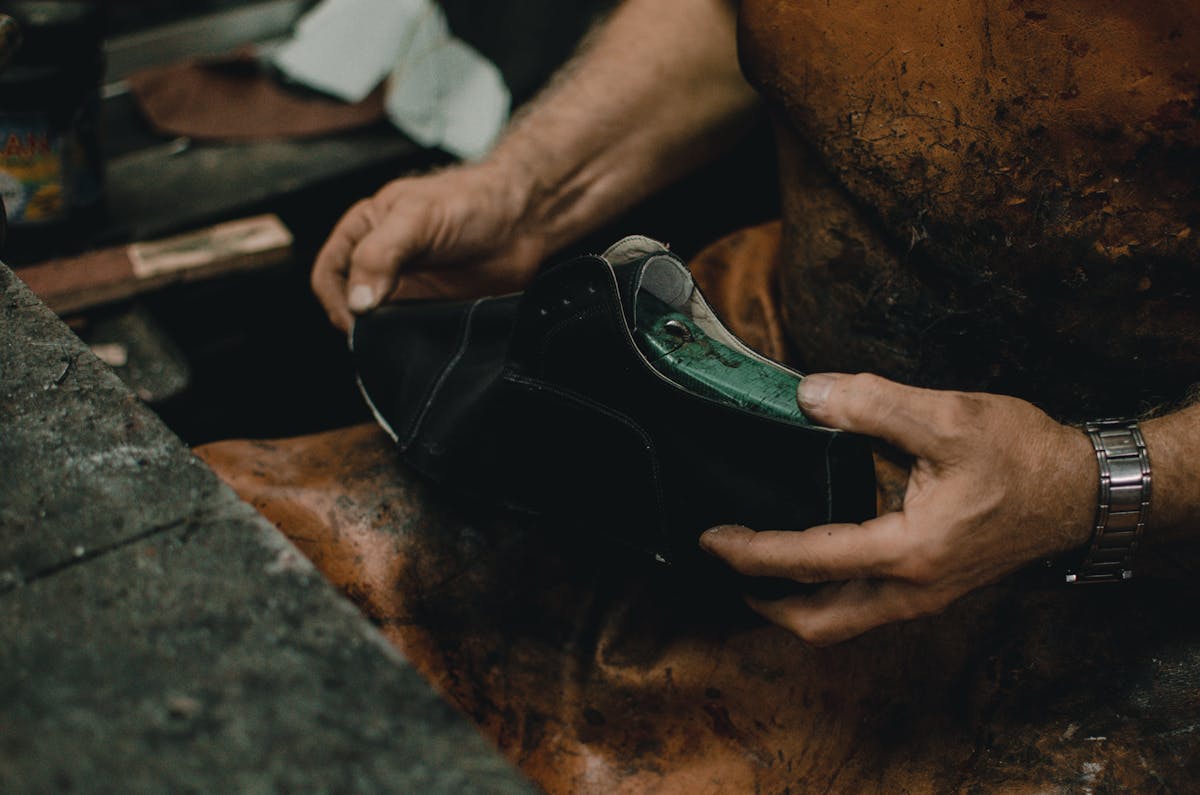
The secret to a shoe that lasts isn’t the leather. It’s the stitching. Specifically, the Norwegian welt: the welt is sewn outward, making the shoe waterproof and — crucially — resoleable. When the sole wears out, a good cobbler removes it and fits a new one. The rest of the shoe carries on.
The Michael by Paraboot is essentially the Le Creuset of footwear. Made in Izeaux, in the Isère department, since the 1940s. Natural para rubber sole (hence the name), grained leather, round silhouette. It’s sturdy, it’s comfortable once broken in — and let’s be honest, the break-in takes a good week, sometimes two. But after that, it’s like leather slippers.
A well-maintained Paraboot lasts 20 to 30 years. The key: rotate your pairs (never wear the same pair two days running), use cedar shoe trees after each wear, and condition the leather two or three times a year.
For those looking to step up: J.M. Weston (Limoges, French Goodyear welting at its finest), Crockett & Jones (Northampton, England, since 1879), or Tricker’s (also Northampton, specialists in the country boot). Pricier, but the same principle: a shoe that can be resoled is a shoe that lasts.
The technical backpack — Porter-Yoshida (~€200–400)
In Japan, there’s a relationship with objects that exists nowhere else. The word “monozukuri” describes the art of making things with care. Porter-Yoshida is its textile embodiment. Founded in 1935 by Kichizo Yoshida in Tokyo (the PORTER brand launched in 1962), the company produces exclusively in Japan, in its own workshops.
The Tanker model (inspired by MA-1 flight jackets) is a classic: triple-layer ballistic nylon, reinforced stitching, YKK hardware on every closure. The bag weighs almost nothing yet takes a beating. Japanese forums regularly feature Porter bags aged 15, even 20 years, showing virtually no signs of fatigue. The seams don’t give. The zips don’t jam. The fabric doesn’t pill.
It’s not the most stylish bag in the world — the design is functional, understated, almost military. But it might be the most reliable.
An alternative for photographers and fans of British style: Billingham, made in Cradley Heath, Staffordshire. Treated canvas, full-grain leather, brass buckles. A Billingham Hadley looks like a 1970s reporter’s bag and will probably last until 2070.
The Breton stripe top — Saint James Minquiers (~€70)
Everyone owns a marinière. The problem is, most aren’t worth much. Thin cotton, seams that twist after five washes, stripes that warp within a year. The fast-fashion marinière is a disposable garment disguised as a classic.
The Minquiers by Saint James is something else. Knitted in Saint-James, Normandy, since 1889, in heavy cotton jersey (the same knit used for real sailors’ sweaters). The cotton is combed, tight, dense. It doesn’t pill. It doesn’t stretch. It doesn’t shrink. After ten years, the marinière is simply softer.
€70 for a garment that lasts a decade. Compare that to a €25 marinière you replace every two years. The maths speaks for itself.
The Breton alternative: Le Minor, in Guidel, near Lorient. Same philosophy, same quality, perhaps a bit more character in the designs. Purists argue between the two — in either case, it’s BIFL clothing.
The multi-tool — Leatherman Wave+ (~€120)
Tim Leatherman invented the first multi-tool in 1983, in his Portland, Oregon garage, after a road trip through Europe where he constantly needed pliers and a screwdriver. The Wave+ is the refined version of that idea: 18 tools built into a stainless steel housing that fits in the palm of your hand.
Pliers, knife, saw, file, Phillips and flathead screwdrivers, can opener, bottle opener, ruler… The kind of object you toss in a drawer or a bag and end up using three times a week. A piece of furniture to assemble, a wire to cut, a screw to tighten. The Leatherman is the antidote to the junk drawer: one tool instead of fifteen.
Guaranteed for 25 years. In practice, it lasts much longer. The mechanisms are solid, the blades replaceable, and Leatherman’s after-sales service is exemplary. The quintessential EDC (Every Day Carry) item.
Marseille soap — Marius Fabre 600g cube (~€10)
This one is the most radical BIFL on the list. Not for its lifespan (a cube does eventually get used up, obviously) but for its principle: a single product that replaces a dozen plastic bottles.
Marius Fabre has been making soap in Salon-de-Provence since 1900. The recipe hasn’t changed: 72% vegetable oil (olive or copra), soda, water, salt. Cooked in a cauldron for ten days. No dyes, no synthetic fragrance, no preservatives. A 600g cube lasts months, even with daily use.
Hand laundry, camping dishes, body wash, textile stain remover, all-purpose cleaner. Marseille soap does everything, does nothing badly, and produces zero plastic waste. The cube sits on the edge of the sink and slowly dissolves, without any fuss.
Ten euros. Ten euros for months of versatile use. It’s so simple it’s almost suspicious in a world of “goji berry extract” shower gels at €8 for 250 ml.
The leather satchel — Bleu de Chauffe (~€250–350)
Vegetable-tanned leather has a property that industrial leather doesn’t: it develops a patina. Over time, with hands, rain, and sunlight, it takes on a deeper colour, warmer reflections, a unique texture. A vegetable-tanned leather bag at five years old is more beautiful than the same bag when new. That’s the exact opposite of plastic.
Bleu de Chauffe makes its bags and satchels in Limoges, from full-grain vegetable-tanned leather with saddle stitching. The brand takes its name from the blue work overalls of French railway workers — the “bleu de chauffe” — and there’s something workmanlike in the approach: no flashy logo, no showy marketing, just good leather well assembled.
The Puncho model is a satchel that transitions from office to weekend. Sober, functional, almost austere at first. Then, after a few months, it starts telling your story.
For those after the very top tier in leather goods: Swaine Adeney Brigg (London, supplier to the British Crown since 1750) or Peter Nitz (Zurich, absolute bespoke — every piece is unique). The price bracket changes entirely, but the principle stays the same: good leather, well stitched, lasts a lifetime.
The wool blanket — Brun de Vian-Tiran (~€200–600)
Some houses have a longevity that makes your head spin. Brun de Vian-Tiran has been making wool blankets in L’Isle-sur-la-Sorgue, Provence, since 1808. Eight generations. Two centuries of handed-down craftsmanship.
The mill works with noble fibres — merino, mohair, cashmere, alpaca, yak — on looms that blend tradition with modern precision. A Brun de Vian-Tiran blanket is dense without being heavy, warm without stifling. Wool naturally regulates temperature and humidity, something no synthetic fibre does properly.
In terms of lifespan, we’re talking decades. Not five or ten years like a polyester throw that pills at the first frost. Real decades, with minimal care (air regularly, wash rarely, always cold). Some of the house’s blankets have outlasted two generations of owners.
The entry price is around €200 for a merino blanket. It’s an investment, yes. But divide by the number of winters.
The glasses — Lesca Lunetier (~€250–350)
Here’s an object most people treat as disposable. You change glasses every two or three years, grab the frame covered by your health plan, and start over. Yet a good frame has no reason to die. It’s the lenses you change (when your vision evolves), not the structure.
Lesca Lunetier has been based in Châtillon-sur-Chalaronne, in the Ain department, since the 1960s. The frames are cut from sheets of cellulose acetate — a noble material, denser and more resilient than cheap injection-moulded acetate. The hinges are riveted (not screwed), which eliminates the classic problem of screws working loose.
The result: frames that last 15, 20 years without flinching. You change the lenses, you keep the frame. The Lesca style — round or panto shapes inspired by the 1950s and 60s — is timeless enough never to look dated.
€250 to €350 for the frame alone. That’s more than a chain-store frame, obviously. But how many chain-store frames have you thrown away in your lifetime?
The folding bike — Brompton (~€1,200–2,500)
This is the most expensive item on the list and, paradoxically, one of the best examples of BIFL. A Brompton is a folding bicycle made in London (Greenford, to be precise) since 1975. Hand-brazed steel frame. A three-move fold that borders on a magic trick: in 15 seconds, the bike becomes a compact block that fits in a cupboard, under a desk, or in a car boot.
It’s not the fastest bike. It’s not the lightest. It’s not the most comfortable over long distances. But it’s the bike you actually ride, because you can take it everywhere. On the metro, on the train, into a restaurant. The best bike in the world is the one you actually use.
The BIFL case is ironclad: Brompton supplies spare parts for every model built since 1987. Every component is replaceable. There’s a global community of enthusiasts riding daily on Bromptons that are 20, 25, sometimes 30 years old. The steel frame doesn’t fatigue (unlike aluminium, which has a limited fatigue life). When the tyres wear out, you change them. When the cables tire, you replace them. The bike itself carries on.
The entry price is around €1,200, and it climbs quickly with options. That’s a budget. But a Brompton amortised over 20 years works out to €60 a year for urban transport. Try doing better with a Navigo pass.
The hand brush — Andrée Jardin (~€25–40)
We end with the humblest object on the list. And that’s deliberate. Because the BIFL philosophy isn’t just about beautiful things, display pieces, items you show off. It’s also about everyday objects, the ones you don’t even notice any more.
Andrée Jardin makes brushes, brooms, and hand brushes in France — beech wood, natural fibres (tampico, horsehair, silk), hand-assembled. The kind of item you’d find in a village hardware shop since time immemorial, and that we’ve gradually replaced with Chinese injection-moulded plastic sold for €3 at the supermarket.
The €3 plastic hand brush lasts a year, maybe two. The synthetic bristles flatten, the handle snaps, the whole thing goes in the bin. The €30 Andrée Jardin brush lasts ten years. The natural bristles keep their spring, the wood develops a patina, and even if the bristles eventually wear down (after a very long time), the object remains more dignified than a new piece of plastic.
€25 to €40 for an object you use every day that lasts a decade. BIFL isn’t about luxury. It’s about common sense.
The BIFL arithmetic
Sceptics will say all this is expensive. So let’s do the maths. Take five objects from the list and compare them with their “disposable” equivalents.
The pocket knife. An Opinel N°8 costs €15 and lasts at least 30 years. Annual cost: €0.50. A cheap knife at €5, replaced every 3 years, works out to €1.67 per year. Advantage: BIFL.
The pot. A Le Creuset at €300 easily lasts 50 years (and often longer). Annual cost: €6. A budget pot at €40, replaced every 5 years: €8 per year. Advantage: BIFL — and the cooking quality isn’t even comparable.
The stripe top. A Saint James at €70 lasts 10 years. Annual cost: €7. A fast-fashion marinière at €25, replaced every 2 years: €12.50 per year. Advantage: BIFL.
The shoes. Paraboot Michaels at €390, resoled once (€80), last 25 years. Annual cost: €18.80. Shoes at €80, replaced every 3 years: €26.67 per year. Advantage: BIFL — not counting the incomparable comfort of broken-in leather.
The hand brush. An Andrée Jardin at €30 lasts 10 years. Annual cost: €3. A plastic brush at €4, replaced every 18 months: €2.67 per year. Slight advantage to disposable on paper — but factor in the environmental cost, the frustration of flattened bristles, and the pleasure of using a beautiful object, and the calculation tips.
Across these five items, BIFL comes to roughly €35 per year. Disposable: €51 per year. And we haven’t even mentioned the difference in daily experience.
What it really changes
BIFL isn’t reserved for the wealthy. The Opinel costs €15. The Marius Fabre costs €10. The Saint James marinière costs €70. These aren’t luxury prices. They’re normal prices for normal objects, simply well made.
The real shift is in the question you ask before buying. Not “how much does it cost?” but “how much does it cost per year of use?” Not “is it expensive?” but “will it last?” It’s a reflex you learn, and once acquired, it transforms every purchase from an expense into an investment.
A good object can be repaired. It develops a patina. It gets passed down. It tells the story of the person who uses it.
A bad object gets thrown away. And it tells no story at all.