There is a sound in the Greenford factory, in northwest London. The crackle of molten brass on steel tubes. Not the sharp snap of robotic welding. Brazing at Brompton is done by hand. Every frame. Since 1975.
Eighty craftspeople know how to do this. Eighteen months of training for each one. When one of them finishes a frame, they stamp their personal mark on it - like a potter signing their piece. For the fiftieth anniversary, Brompton struck a brass token - the Brazer’s Coin - engraved with the initials of 52 brazers, those who forged the brand’s history. The signature of the person who put their hands on it.
The South Kensington Flat
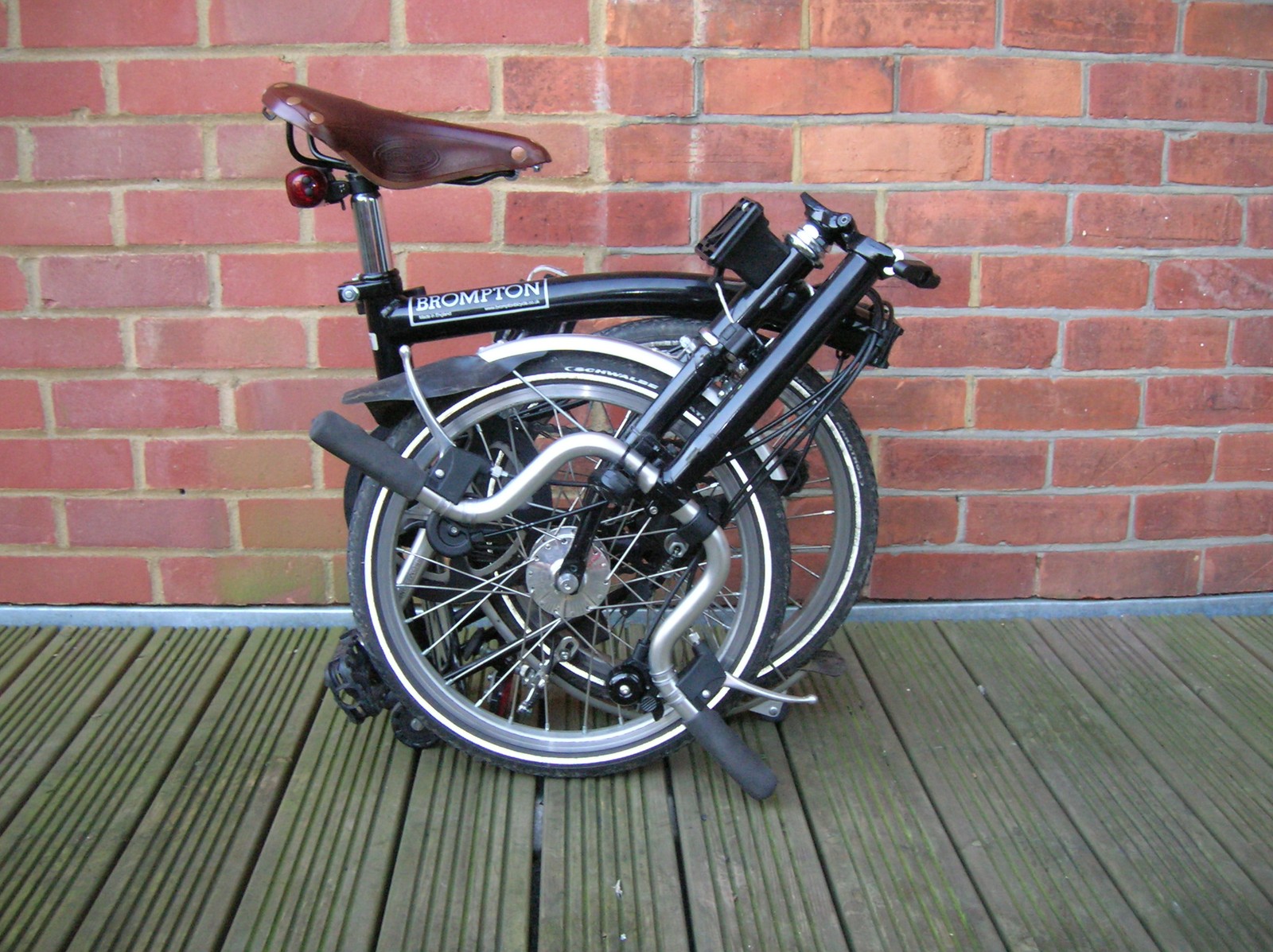
The story begins in 1975, in a flat facing Brompton Oratory in South Kensington, which would give the bike its name. Andrew Ritchie, a Cambridge engineer, had watched his father - a stockbroker - get around on a Bickerton, the folding bike of the era. The Bickerton folded, but badly. Ritchie thought he could do better. He designed a three-part fold. Fifteen seconds to turn a bike into a package measuring 58.5 x 56.5 x 27 cm. Half a century later, the mechanism is identical. No competitor has matched its compactness without sacrificing ridability.
To build the first prototype, Ritchie convinced ten friends to invest £100 each. A thousand pounds total. The first factory didn’t come until 1987, under a railway arch in Brentford, with £100,000 in capital. The company grew slowly, stubbornly, without spectacular fundraising or a saving acquisition. When Will Butler-Adams arrived in 2002, there were about forty people. He took over as managing director in 2008. Under his leadership, Brompton went from boutique craft operation to small-scale exporting manufacturer, without ever touching the brazing. The factory moved from Brentford to Greenford in 2011.
80 Pairs of Hands
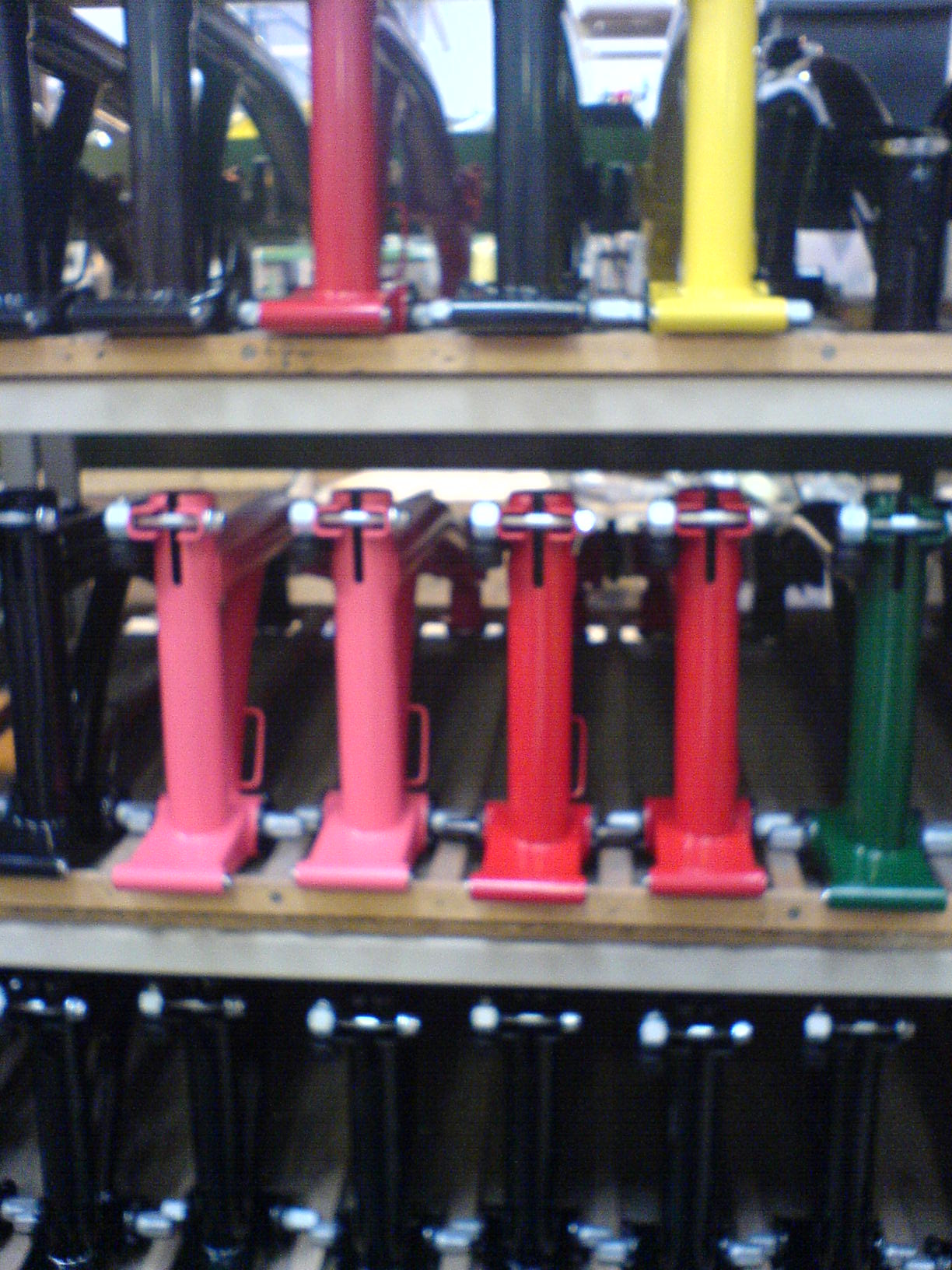
The technique is anything but decorative. Brass brazing involves assembling steel tubes by melting a brass alloy into the joints with a flame, without melting the tubes themselves. It’s a precision skill that requires feeling the heat, reading the colour of the metal, adjusting the flame in real time. A robot could weld. It couldn’t braze with this finesse.
Each brazer takes eighteen months to train. Turnover is low - you don’t easily leave a craft that barely exists anywhere else. User forums regularly cite brazing as a guarantee of superior durability. Owners report bikes of ten, fifteen years in excellent condition. Resale value stays high - a used Brompton sometimes trades above the price of a new one.
Today, the Greenford factory employs 450 to 500 of Brompton’s 800 worldwide staff. Theoretical capacity reaches 3,500 bikes per week. One million bikes have been sold in total. 500,000 are still in circulation. 80,000 ride on London’s streets. It’s the UK’s largest bicycle manufacturer. And everything passes through 80 pairs of hands.
The Fold, the Ultimate Argument
What makes Brompton irreplaceable is the fold. Not a marketing gimmick - an engineering solution that no competitor has matched in fifty years.
The folded bike fits under a desk. It enters a train without bothering anyone. It stores in a Parisian hallway closet. For urban commuters combining cycling and public transport, it’s the only bike that truly disappears. Dahon, Tern, others fold too. None fold as small.
With 20 million possible configurations - colours, options, gear ratios - every Brompton is almost unique. The “Life Unfolded” visual identity, designed by Studio Blackburn, carries this idea: the bike that unfolds is also a life opening up.
It’s this physical constraint - the compact fold - that justifies everything else. The high price. The quasi-cultish community. The Brompton World Championships (next at King’s Cross, June 21, 2025, for the fiftieth anniversary). The fact that a small-wheeled city bike can inspire the same loyalty as a mechanical watch or an artisan bag.
Four Lines, One Philosophy
The Brompton range has structured itself into four lines, each with its own character.
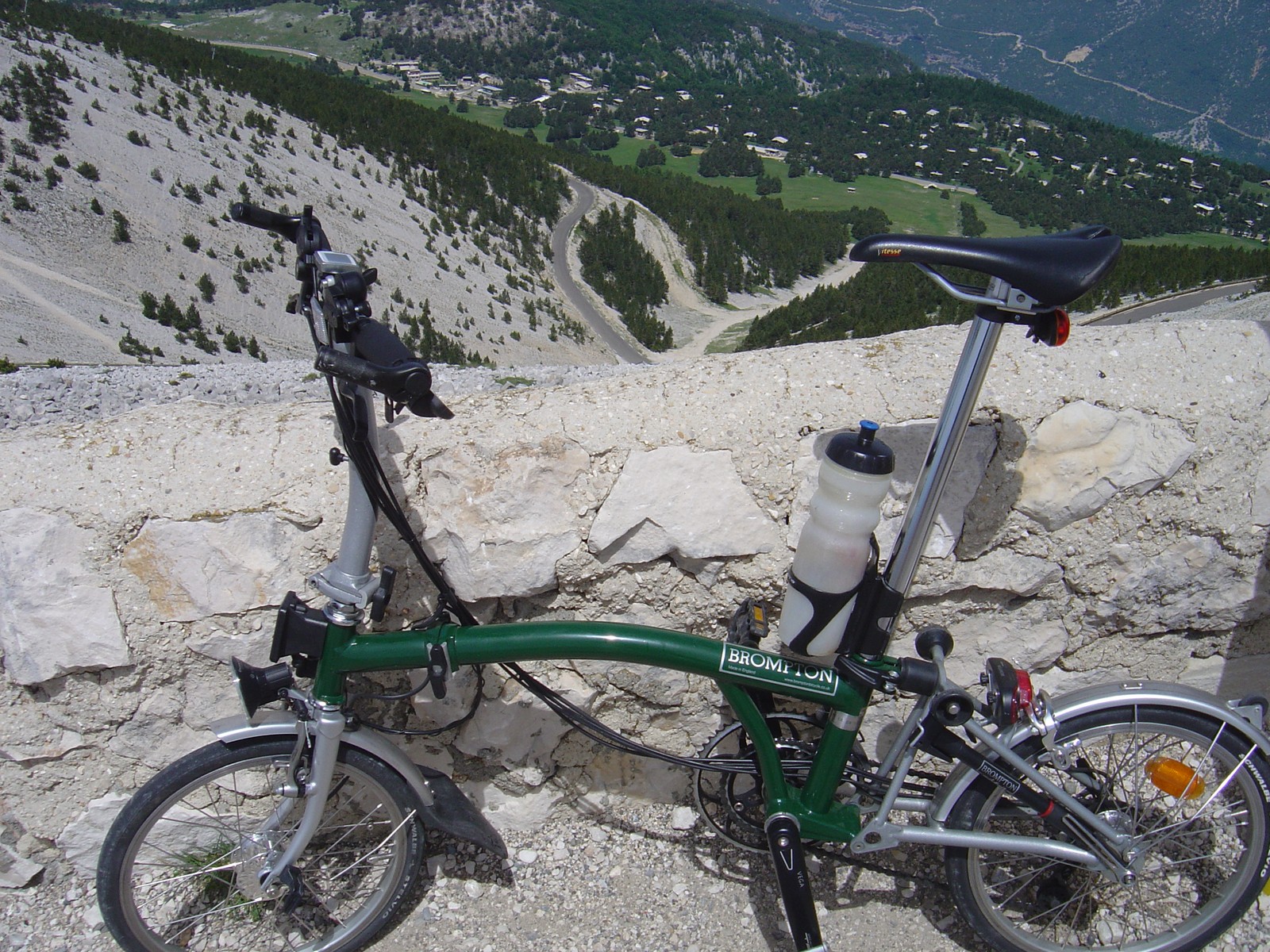
The C Line is the original Brompton. All steel, about 11 kg, around £1,500. The factory produces some 1,200 per week. It’s the volume seller, the classic, the one most owners start with.
The P Line introduces titanium at the rear - steel frame, titanium rear triangle, the “half and half” as the engineers call it. About 200 per week. A weight-price compromise that appeals to demanding commuters.
The T Line is the summit. All titanium, 7.45 kg without assistance - the lightest Brompton ever made. About 100 per week, around £4,500. A pure engineering object.
The G Line, launched in October 2024, explores new territory. 20-inch wheels instead of 16, hydraulic disc brakes, Shimano Alfine 8-speed hub. A larger, more versatile Brompton targeting those who want a folding bike without the small-wheel compromise. 6,707 units sold in the first year, about 9% of total sales.
The T Line Electric: Titanium Under Tension
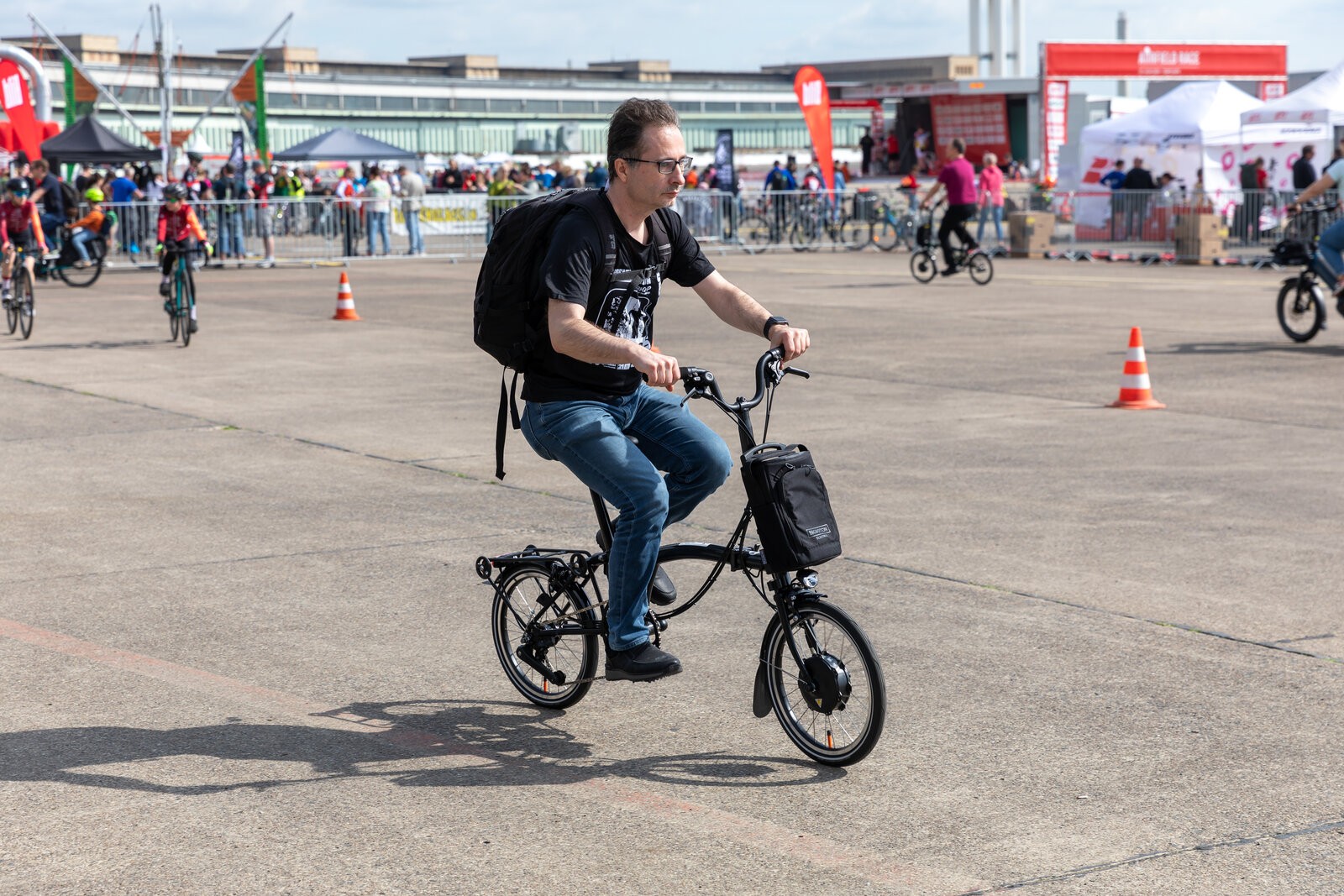
In January 2026, Brompton crossed a threshold with the T Line Electric. The first titanium Brompton with electric assist. About 11.2 kg without battery, 14.1 kg with. For a folding e-bike, that’s remarkably light.
The motor is proprietary: e-Motiq, 250 W, 24 Nm of torque, integrated into the rear hub. The 345 Wh battery offers up to 90 km of range. The system learns the rider’s style during the first 100 kilometres and adapts assistance accordingly. WIRED’s verdict - 8/10 - summed up the feeling well: “felt more like I’d supercharged my legs”.
The price: £5,799. It’s expensive. It’s also consistent. Brompton isn’t chasing volume - it’s chasing value. The e-Motiq system is designed to migrate across the entire range.
The Four-Day Week
Brompton has switched to a four-day week. 38 hours, 7 am start, Fridays off. Senior brazers get “tinker time” - time dedicated to experimentation, perfecting their techniques, passing knowledge to newcomers.
It’s consistent with the company’s philosophy. If brazing is a human gesture that can’t be automated, then those who practise it should be treated as craftspeople, not operators. Four days are enough when you don’t waste the fifth.
Independence
Brompton is a private company. Andrew Ritchie remains a shareholder. So does Will Butler-Adams. Employees hold a stake through a trust. BGF, the British Growth Fund, injected £19 million in 2023 for a minority stake. No aggressive private equity fund. No conglomerate. No pressure to offshore.
This independence is the structural counterpart to hand brazing. As long as the brand doesn’t answer to a shareholder demanding 15% annual growth, it can choose to keep 80 brazers. Not to robotise. To train for eighteen months rather than hire temps.
The parallel with Hermes is tempting. Facing the same dilemma - rare craftspeople, demand exceeding supply - Hermes chose to open workshops rather than automate. Brompton doesn’t have Hermes’ margins. But the logic is the same: artisanal constraint as strategic advantage.
The Cycling Industry, in Context
The post-Covid market corrected hard. The inflated sales of 2021-2022 deflated across the industry. Brompton is no exception: 78,530 bikes sold in the financial year ending March 2025, down from 85,000 the previous year. Revenue remains solid at £121.5 million, but margins suffered.
Exports account for most of it: roughly 40% to continental Europe, 30% to China, the rest spread across 47 countries. Brompton has a factory project in Ashford, Kent, currently on hold. 2,500 potential jobs, double the capacity. Butler-Adams is waiting for the market to recover before breaking ground. In the meantime, Greenford keeps turning.
What’s striking is the brand’s resilience in this correction. Premium bikes hold up better than entry-level ones. And a Brompton isn’t a bike you buy on a pandemic impulse - it’s a considered choice, an investment in a lasting object. The customer base is loyal. Resale value protects the buyer.
The Brass Coin
For the fiftieth anniversary, Brompton produced 1,975 units of a limited edition - the 1975 Edition. The Thermal Fade finish draws directly from the colours of brazing: the blues, purples and golds that metal takes on under the flame. The manufacturing process becomes aesthetic.
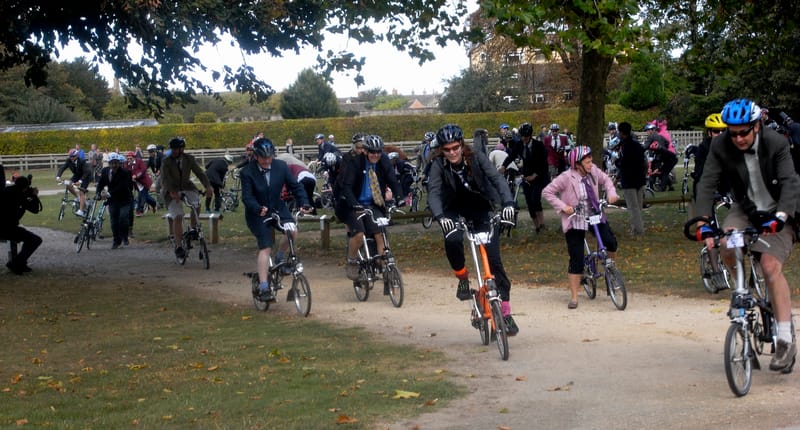
Brompton opened the factory doors on June 19, 2025. Hosted the largest Brompton World Championship at King’s Cross on June 21.
But the most telling gesture is the Brazer’s Coin. A brass token engraved with the initials of the 52 brazers who made the brand’s history. Butler-Adams put it simply: it’s a way of saying that behind every bike, there’s someone.
Many brands talk about craftsmanship. Brompton tells you who made your bike.
Fifty years of brass crackling in Greenford. Fifty years of an unchanged fold. In a world that automates, accelerates and offshores everything, there’s something deeply reassuring about a bike that fits in a bag and bears the signature of the person who made it.