Motofumi Kogi, aka Poggy, launches Dear Boro: 12 pieces between ancestral sashiko and street culture. The survival gesture of Japanese peasants turned into a collection at $1,800 a jacket.
There’s a Japanese word for it: mottainai. The idea that waste is a kind of sin. For centuries, in northern Japan, the peasants of Tōhoku sewed, resewed and patched their clothes until no original fabric remained. Layer upon layer. Generation after generation. They called it boro — literally, “rags.”
In February 2026, Motofumi “Poggy” Kogi launched a brand that wears that word like a banner. Dear Boro. Twelve pieces. From ¥71,500 to ¥291,500. Roughly $455 to $1,856 for a garment that claims the heritage of rural patching. The paradox is dizzying. And that’s precisely what makes it interesting.
Poggy, the curator turned creator
You need to understand who Poggy is to understand Dear Boro. Born in 1976, Motofumi Kogi arrived in Tokyo in 1997 after fashion school in Sapporo. He joined United Arrows, Japan’s multi-brand department store, and stayed for two decades.
First a sales associate, then head of press relations, he launched United Arrows & Sons, the group’s menswear line, in 2010. Poggy doesn’t design. He selects. He combines. He spots brands like 424, Aimé Leon Dore and READYMADE before anyone else and opens the Japanese market to them. He’s a connector. A bridge between Tokyo and the rest of the world, between streetwear and tailoring, between vintage archives and the contemporary.
In 2018, he left United Arrows to go solo. He became fashion curator for 2G, the Parco space in Shibuya where art and clothing merge. He collaborated with Eric Haze, Jimmy Choo, Levi’s, Puma. His name circulates everywhere. Business of Fashion included him in the BoF 500, the list of personalities shaping the global fashion industry.
But Poggy didn’t yet have his own brand. Not really. Not a brand built from scratch, with a vision, a gesture, a name.
Boro: from survival to art
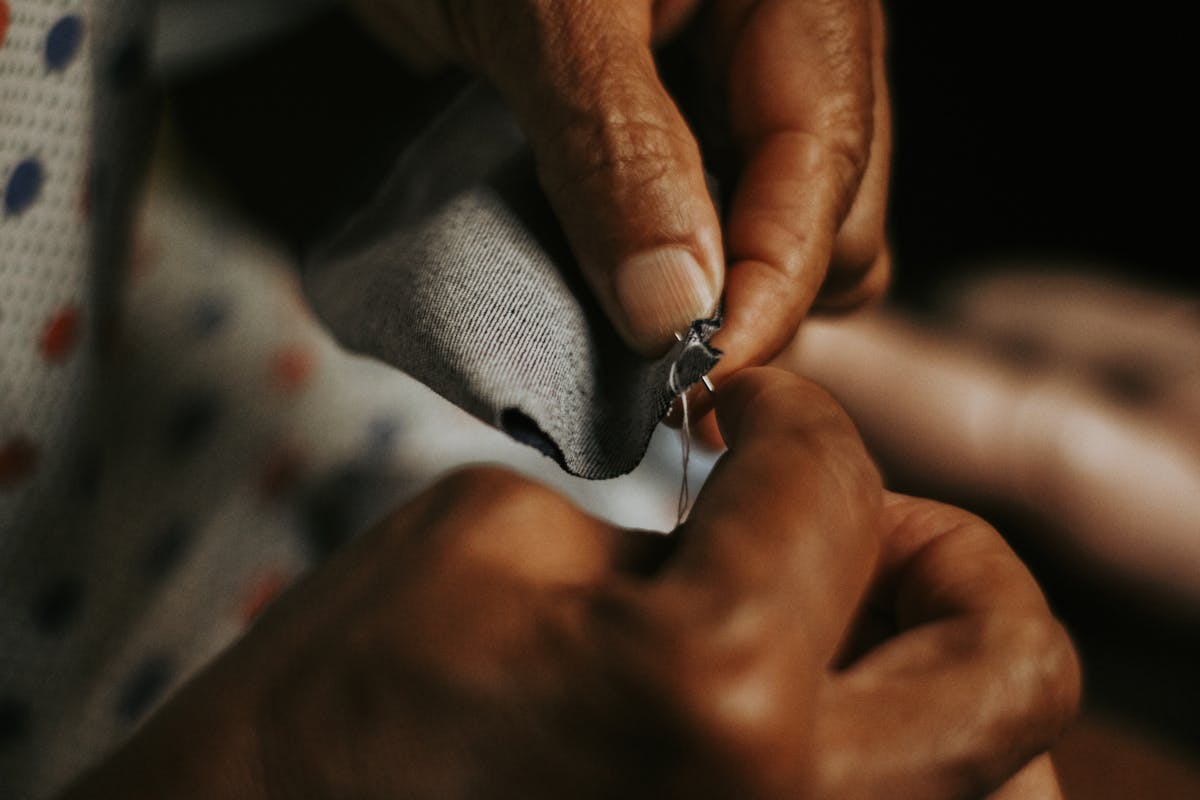
Boro was born of poverty. In the Tōhoku of the Edo period (1603–1868), cotton was rare and expensive. Rural families couldn’t afford to throw away a worn garment. They repaired it. Reinforced it. Added layers of fabric, sewn with thick thread in a running stitch called sashiko — “little stabs.”
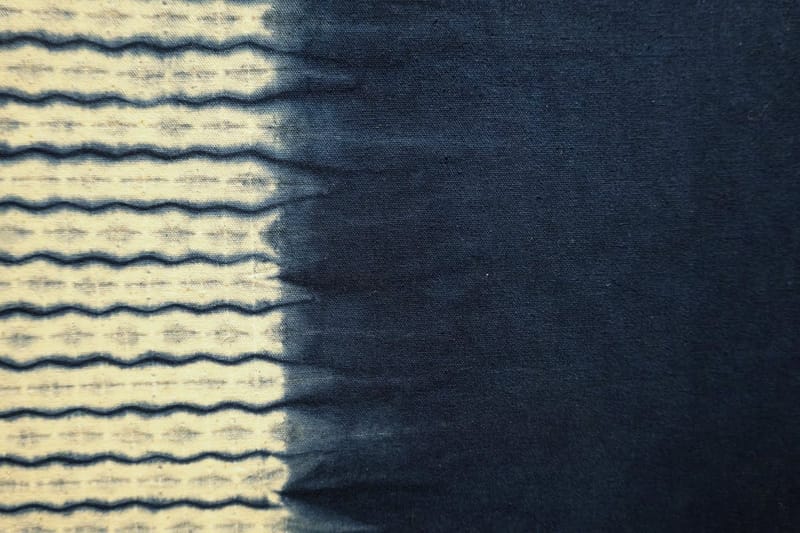
The result is strange and beautiful. Garments as palimpsests. Each added piece of fabric tells of an era, a necessity, one more winter to endure. Indigo dominates, because it was the most accessible dye. The white of the sashiko thread traces geometric lines on the deep blue. This wasn’t decoration. It was survival textile engineering.
For a long time, boro was an object of shame. Wearing patches meant being poor. It took decades for perceptions to shift. Collectors like Chūzaburō Tanaka, a folklorist from Aomori who amassed over 30,000 pieces in his lifetime, then the opening of the Amuse Museum in Tokyo in 2009, helped these textiles gain recognition as a form of involuntary art. Century-old boro pieces now sell in galleries in Tokyo and New York.
Twelve pieces, a manifesto
Dear Boro’s first collection doesn’t look like a first collection. No basic tees to fill the racks. No oversized logo to exist on Instagram. Twelve pieces. Five jackets, utility trousers, jersey basics.
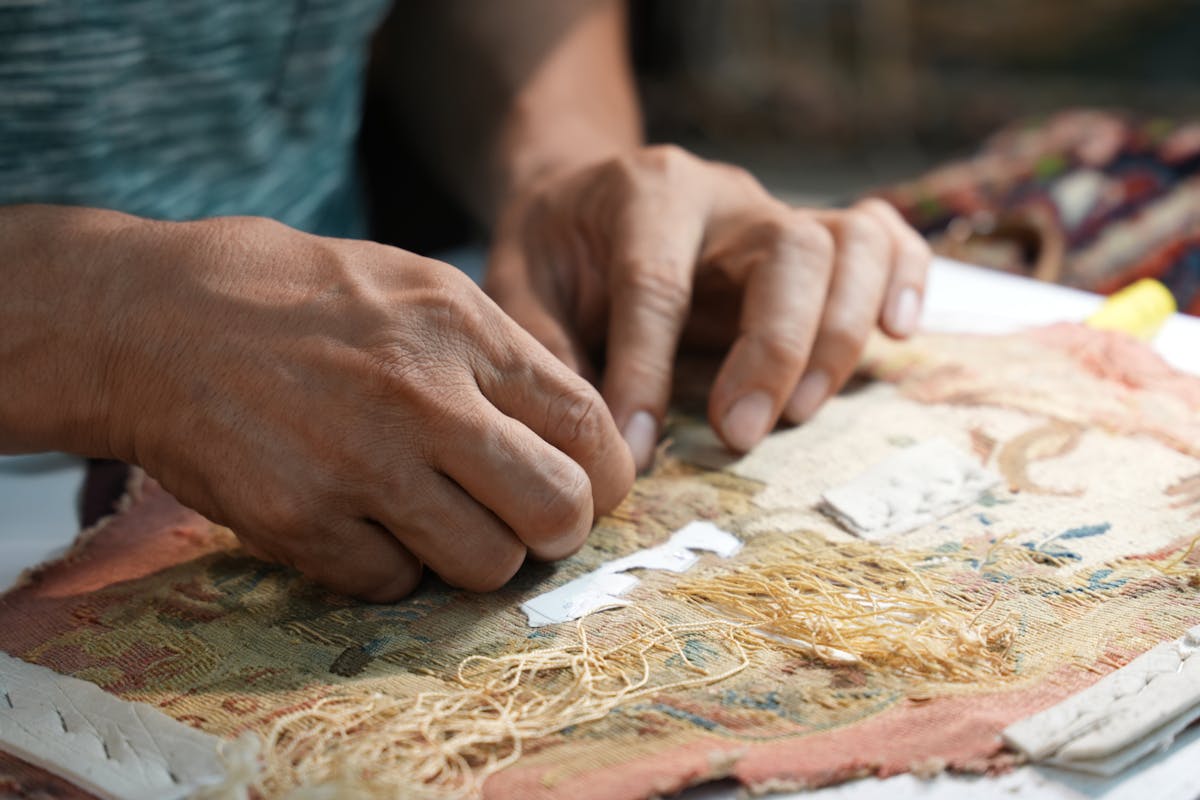
The philosophy fits in one word Poggy uses: “essentiality.” Each garment is made by young Japanese artisans who invest considerable time in construction. The historic sewing techniques of boro and sashiko are reinterpreted as a contemporary artistic medium.
The standout pieces carry evocative names. The 1985 Denim Jacket. The 1985 Jean. Temporal references that anchor the garment in memory. More striking still: the Eric Haze Kung-Fu Jacket, fruit of the collaboration between Poggy and the New York artist Eric Haze. Graffiti meets sashiko. Tokyo and the Bronx, sewn together.
For the launch, rapper SHO (Shohei Yokota) produced an official music video, “Dear Boro,” released in late January 2026 on YouTube. A soundtrack blending Japanese sonorities and contemporary beats, in the spirit of “Wa” — Japanese harmony meeting modernity. The marketing is as hybrid as the clothes.

The luxury boro paradox
This is where it gets complicated. And where it gets fascinating.
Boro was born of people who had no choice. Peasants who patched because they couldn’t buy new. Turning that survival gesture into a collection priced at several hundred thousand yen is a tightrope act. One step too far and you fall into cynical aesthetic appropriation. One step back and you’re stuck in folkloric pastiche.
Poggy isn’t the first to try. KUON, co-founded by Arata Fujiwara and designer Shinichiro Ishibashi in 2016, deconstructs fragments of century-old boro to reincarnate them as contemporary jackets and trousers. Visvim, Hiroki Nakamura’s brand, has been integrating sashiko into pieces that comfortably exceed $1,000 for years. The visible mending movement has turned patching into a global trend, from Brooklyn workshops to Shimokitazawa boutiques.
What sets Dear Boro apart may be its founder’s trajectory. Poggy is neither a textile heir nor a designer trained in pattern-making. He’s a curator. Someone whose job has always been building bridges. Between Japan and the West. Between heritage and street. Between archive and new.
Dear Boro is exactly that: a bridge. Between the gesture of a Tōhoku peasant woman resewing her husband’s jacket and a Harajuku buyer paying ¥291,500 for a handcrafted denim jacket. The distance is immense. The thread connecting them is called sashiko.
What it says about us
The collection, distributed at Nubian Tokyo and through a select network of stockists, tells us something about the times. Luxury now seeks its authenticity in yesterday’s poverty. Survival techniques become selling points. Patching went from shame to shopfront in under thirty years.
You can see cynicism in it. You can also see a kind of justice. Those gestures, those techniques, those hours spent sewing in the dim light of a Tōhoku farmhouse deserved to be seen. Not as vestiges of misery, but as what they are: a remarkably sophisticated skill born of absolute constraint.
Poggy knows it. That’s why the brand is called Dear Boro. Not “Boro” full stop. Not “Boro Tokyo” or “Neo Boro” or some other name that colonises without thanking. Dear. A love letter addressed to a textile whose original creators could never have imagined seeing it in a Shibuya boutique.
The paradox remains whole. But it’s an honest paradox.