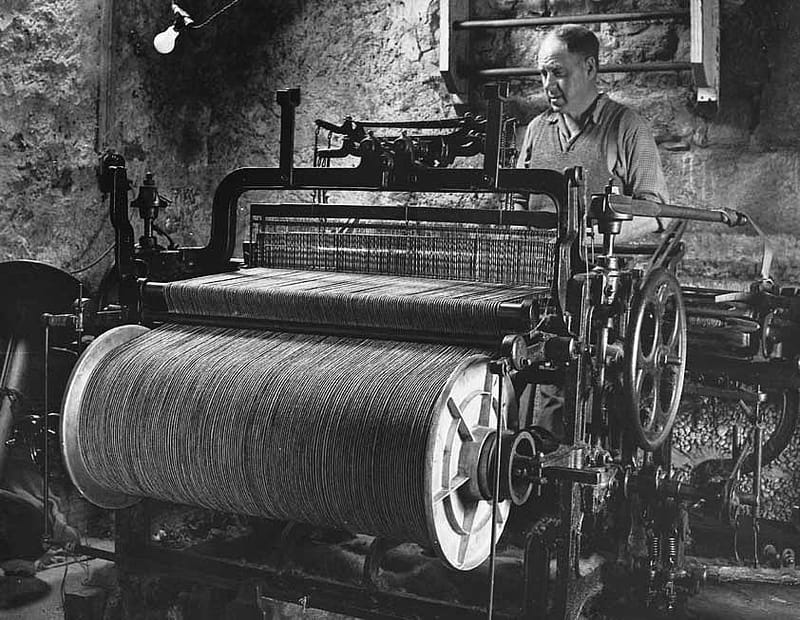
There exists a fabric that cannot be legally counterfeited. Not a label, not a designation of origin, not a simple registered logo. A law. The Harris Tweed Act of 1993 is a text passed by the British Parliament that prohibits selling under the name Harris Tweed any fabric not handwoven by a resident of the Outer Hebrides, at home, on a treadle loom.
According to the Harris Tweed Authority, it is the only fabric in the world protected by its own law.
Why a law?
In the early 1990s, the United Kingdom was revising its trademark law to align with the European Community system. The Harris Tweed Association feared the new legislation would transfer control of the Orb mark to commercial producers, undermining the artisanal link with the islands. So it had a bill drafted to transform the association into a public body and enshrine the fabric’s definition in statute. The text received Royal Assent on July 20, 1993.
This isn’t a whim. It’s a matter of economic survival for islands where tweed has been a pillar for over a century.
The chain, from sheep to stamp
The Harris Tweed manufacturing process is shared between mills and home-based weavers. No step can be offshored. Everything happens on the islands.
Dyeing
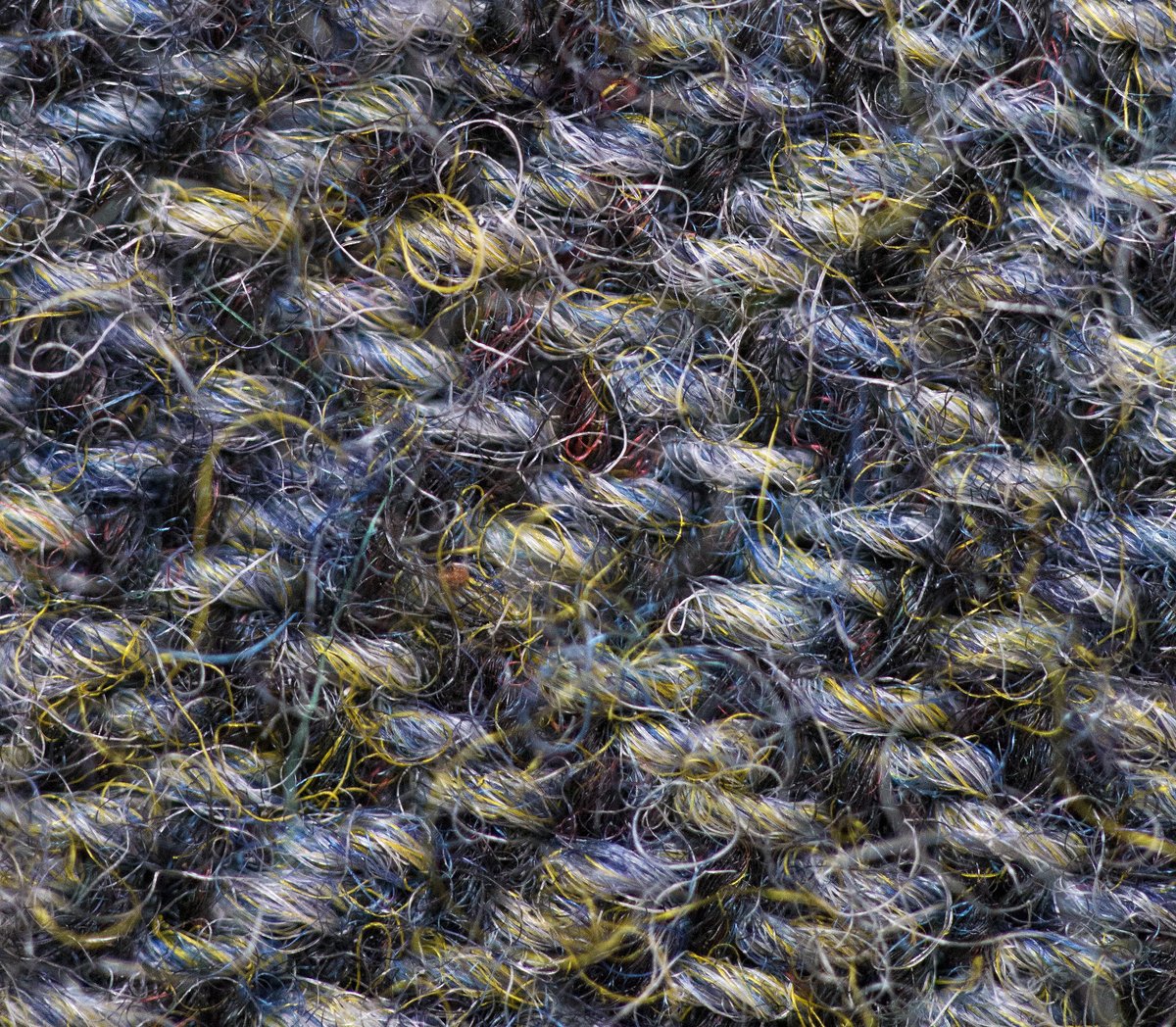
Raw wool arrives in bales at the mills. It’s dyed before spinning — what’s called “dyed in the wool.” The English expression literally comes from this. Fibres are plunged into dye baths for about an hour, then wrung and dried. Several batches per day.
Blending and carding
Dyed wools are weighed in precise proportions and blended to achieve the exact shade required. They then pass between toothed mechanical rollers that untangle and mix the fibres into an embryonic, still-fragile yarn.
Spinning and warping
The yarn is twisted for strength, then wound onto bobbins. Warping is the most technical step at the mill: thousands of warp threads are gathered in a precise order and wound onto large beams, ready to be delivered to weavers at home.
Handweaving at home
This is the heart of the system. The weaver receives the warp and weft yarns from the mill. He weaves at home, on a treadle loom. Not at the mill, not in a shared workshop. At home. It’s a legal requirement.
Each weaver develops their own tension, their own rhythm. The fabric bears the trace of the hand that made it. A difference invisible in a photo, obvious to the touch.
Finishing
The tweed returns to the mill in its raw state. Experienced darners correct every defect by hand. The fabric is washed, beaten in soapy water to remove impurities, dried, steam-pressed, cropped.
The Orb stamp
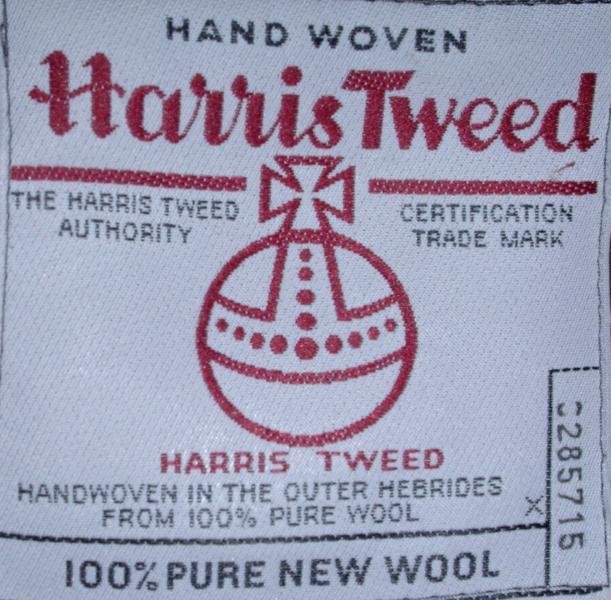
Final step: an independent inspector from the Harris Tweed Authority examines each length of fabric. If satisfied, the inspector stamps the Orb with a hot iron — the famous seal: a cross surmounting a globe surrounded by thirteen small crosses. This symbol was registered in 1910, and the first stampings began in 1911.
Without the Orb, it isn’t Harris Tweed. Full stop.
Three mills, and that’s it
There are only three Harris Tweed mills in the world, all on the Isle of Lewis in the Outer Hebrides.
Kenneth Mackenzie Ltd, in Stornoway, opened in 1906. The historic mill, owned by an islander.
Harris Tweed Hebrides, in Shawbost, on the west coast. The largest of the three. The Shawbost site has produced tweed since the 1920s, but the mill closed in 2005 before being bought and relaunched in 2007 by Ian Angus Mackenzie.
The Carloway Mill, which bills itself as the oldest Harris Tweed mill still in operation, with machinery dating from 1892. Also the smallest, six miles from Shawbost.
In 2024, these three mills produced over 580,000 metres of tweed. The industry runs on roughly 140 weavers.
Harris Tweed vs. industrial tweed
A standard tweed — Donegal, Highland, Shetland — can be machine-woven, anywhere. The name “Donegal Tweed,” for instance, currently enjoys no comparable legal protection, although efforts are underway to obtain a European geographical indication.
Harris Tweed can’t cheat. Every metre is traceable: you know which mill prepared the yarns, which weaver wove it, which inspector stamped it.
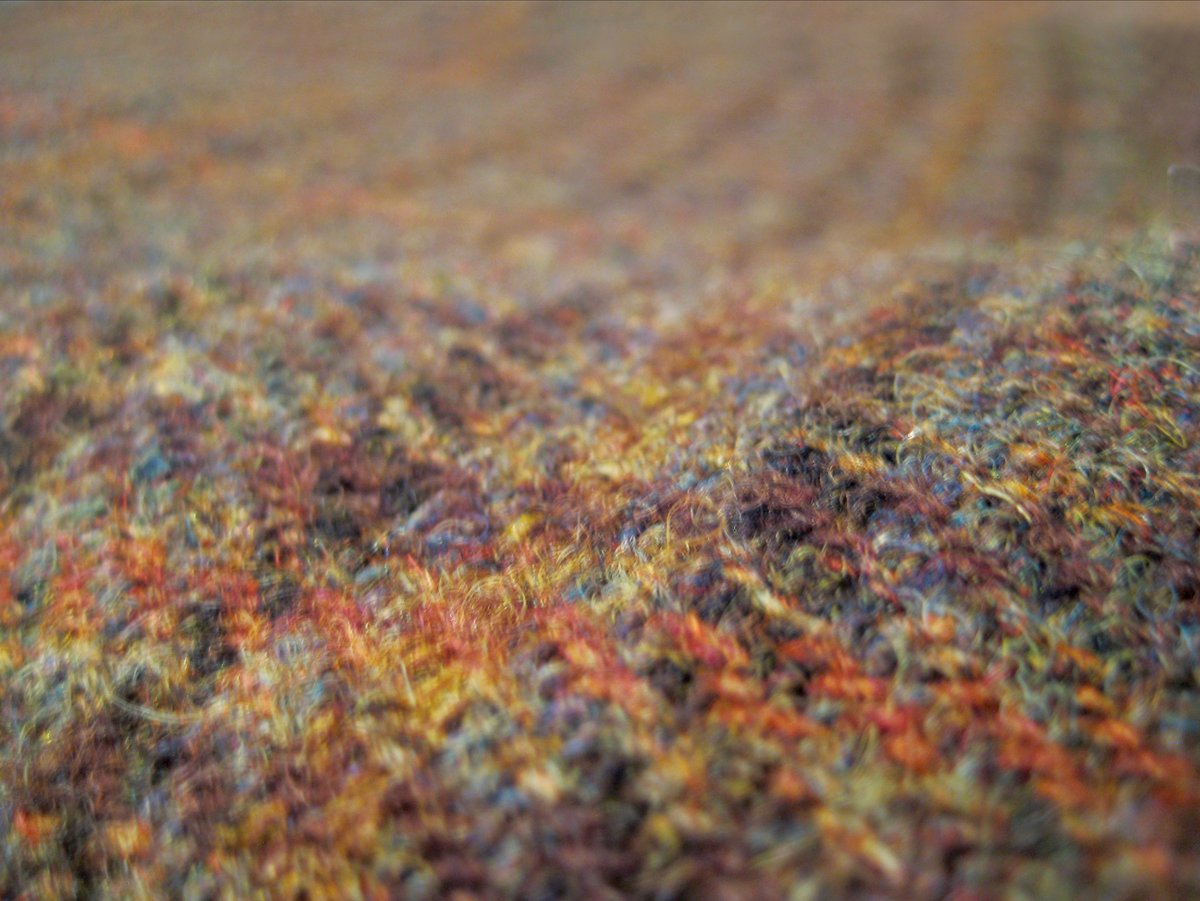
To the touch, Harris Tweed is firm, a little stiff, sometimes rough. That’s not a defect. It’s a fabric designed for the wind, rain and cold of the Hebrides. It softens over time without losing its structure.
The price reflects the reality of the process: a fabric handwoven on a remote island costs more than tweed from a Yorkshire factory. That’s logical. What’s less logical is paying the same price for industrial tweed thinking you’re buying craft.
How to spot real Harris Tweed
Three checks, in order:
The Orb. Look for the seal stamped on the back of the fabric or on the label sewn into the garment. It’s a globe topped with a Maltese cross, surrounded by thirteen small crosses, with “Harris Tweed” written below.
The legal wording. “Handwoven in the Outer Hebrides of Scotland” must appear somewhere. If the label says “Harris style” or “inspired by Harris Tweed,” it isn’t Harris Tweed.
The feel. Real Harris Tweed has a distinct, irregular, living texture. A tweed that’s too smooth, too uniform, probably came off a power loom.
Where to buy
The Harris Tweed Authority maintains a list of approved producers and retailers on its website. All three mills also sell directly.
For fabric by the metre, Harris Tweed Hebrides and The Carloway Mill offer collections online. For finished garments, many British tailors and brands use certified Harris Tweed — but always check for the Orb.
On the islands themselves, several shops and workshops welcome visitors. That’s obviously the best way to understand this fabric: see the looms, feel the wool, hear the clack of the treadles.
What it says about us
Harris Tweed is an anachronism. A fabric that refuses industrialisation in a world obsessed with scale. 140 people, on wind-battered islands, handweave a fabric that Parliament deemed important enough to dedicate a law to.
It’s slow. It’s expensive. It’s exactly the kind of thing that should have disappeared.
And yet, 580,000 metres in 2024. A recruitment drive launched by the HTA in 2023, new weavers trained, a rejuvenation of the trade. Orders coming in from Japan, Italy, the United States.
There may be a lesson in that. You don’t need to scale to last. Sometimes, constraint is what protects.