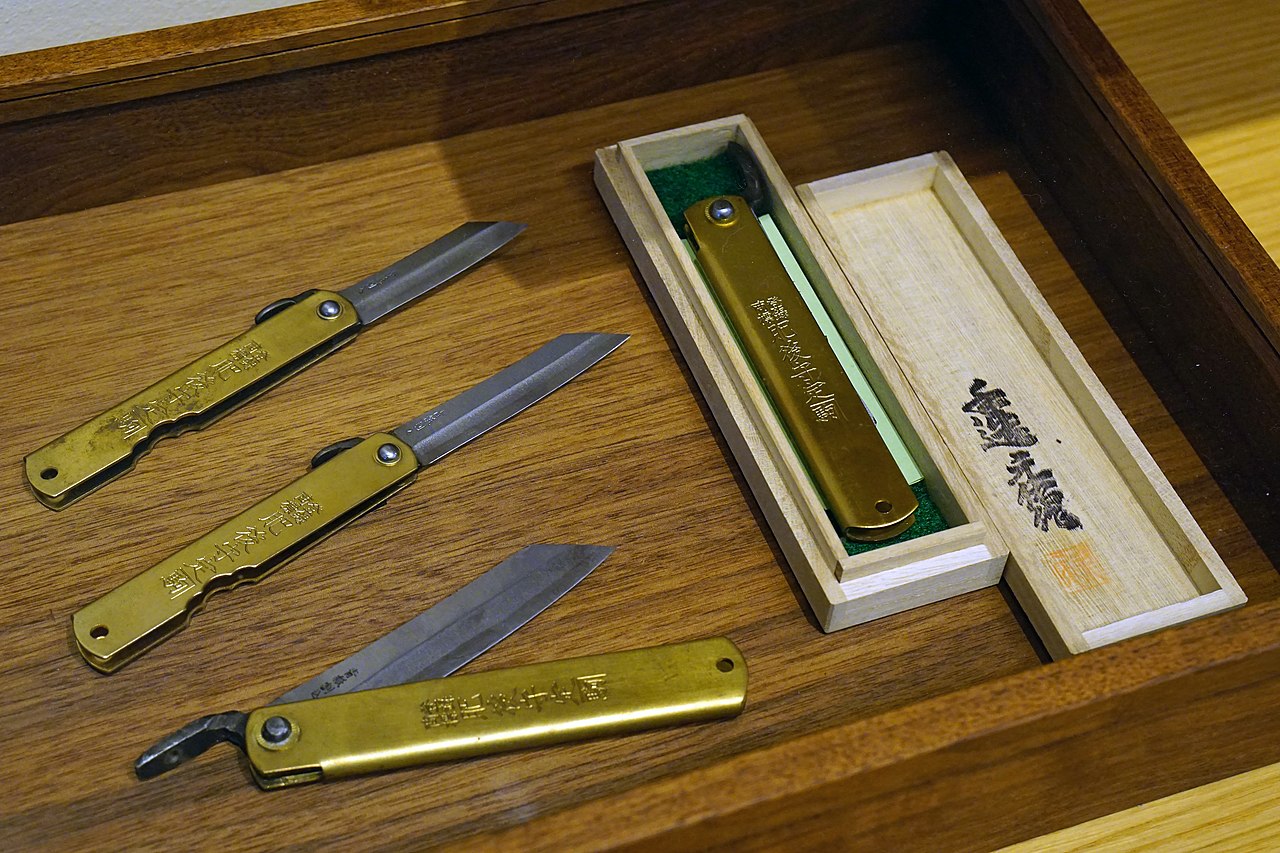
The workshop is small. Smaller than one would imagine. A long room, machines lined up against the walls, piles of cut brass on a workbench. No storefront, no showroom. Just the dry sound of metal being bent, the smell of the grinding wheel, and the hands of Mitsuo Nagao repeating the same gestures as his great-great-grandfather.
Miki, Hyogo prefecture. A city of blacksmiths since the 16th century. It is here, in this workshop, that the last authentic Higonokami in the world is born.
From 200 artisans to a single man
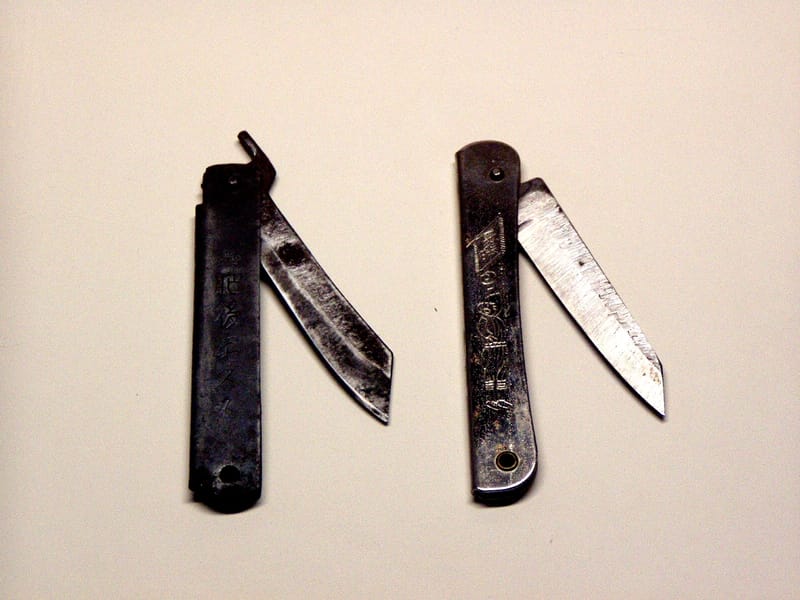
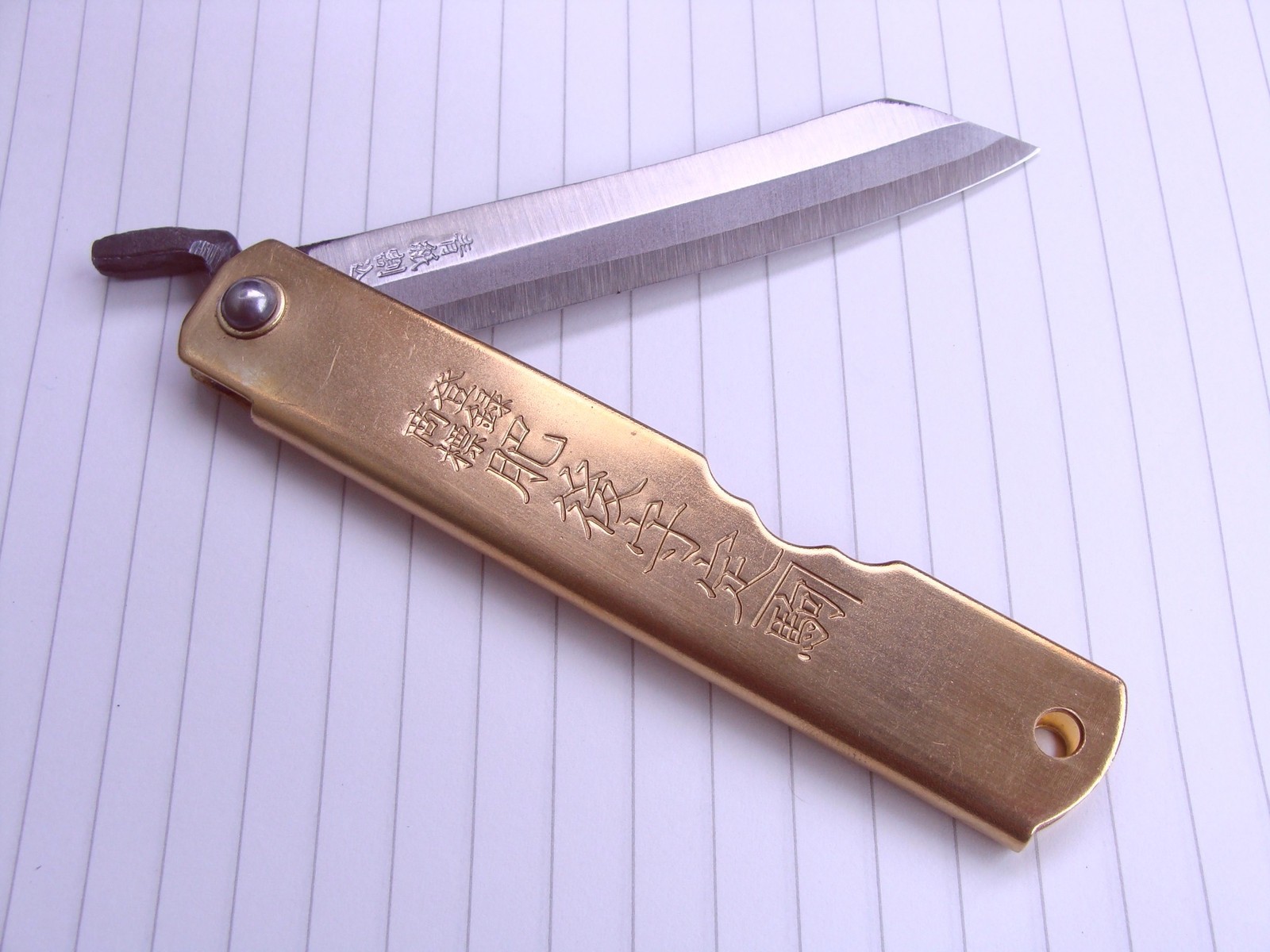
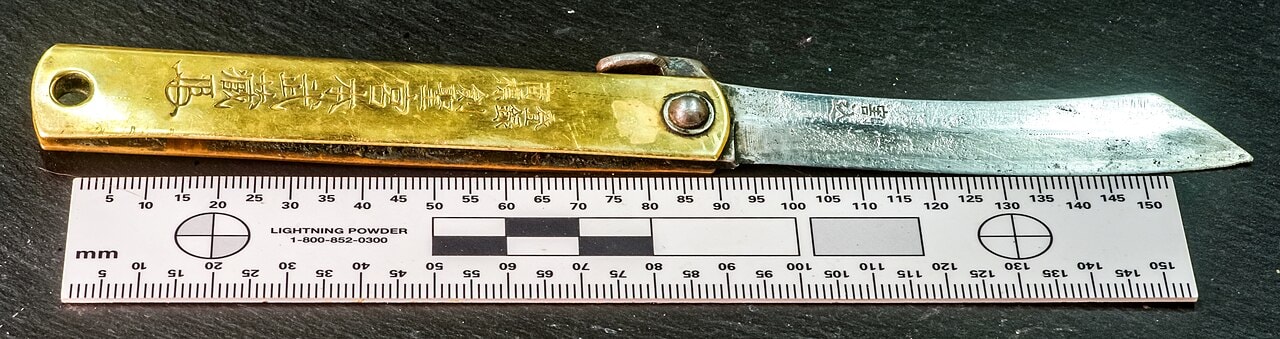
In the 1880s, Komataro Nagao opened his workshop in Miki. In 1894, a wholesaler named Tasaburo Shigematsu ordered a new model of pocket knife from him. The Higonokami was just born. A carbon steel blade, a folded brass handle, a thumb lever for opening - the chikiri. No spring, no lock. Nothing but the essential.
The timing was perfect. In 1876, the Haitōrei decree prohibited wearing swords. Hundreds of unemployed blacksmiths turned to utility cutlery. The Higonokami became everyone’s tool. The schoolchild slipped it into his satchel. The artisan wore it on his belt. The farmer used it to prune, cut, scrape. A universal knife, sold for almost nothing.
In 1899, the manufacturers founded the Higonokami Knife Union. Forty workshops, over 200 artisans. Production was in full swing. In 1910, faced with counterfeits, the brand was officially registered. Only members of the Miki cutlers’ association could use it.
In 1911, Crown Prince Yoshihito bought a Higonokami at the Kobe Exhibition. Imperial prestige was added to popular popularity. The knife was everywhere.
Then the world changed. Industrialization brought cheaper disposable knives. The 1961 law on bladed weapons prohibited carrying the Higonokami at school. Schoolchildren, the main market, disappeared overnight. The workshops closed. One by one, in silence, like candles being blown out.
Today, there is one left. Only one. Mitsuo Nagao, fifth generation.
The Opinel parallel
You have to put the two side by side to understand. The Higonokami and the Opinel were born at the same time, in the 1890s. Same archetype - a simple, cheap, popular folding knife. Same vocation - the pocket knife for an entire country.
Destinies diverged.
Opinel industrialized without betraying. The factory is still in Savoie, the handles are still made of wood, the blades of steel. But production is mechanized, organized, distributed worldwide. Millions of knives per year. Joseph Opinel had heirs who knew how to grow without changing the nature of the product.
The Higonokami, however, did not have this transition. The artisanal structure remained artisanal. No factory, no mechanization, no organized export. The domestic market collapsed, and no one took over internationally. When the workshops closed, there was no structure to absorb the shock.
It’s not a question of quality. It’s a question of model. Opinel built a company around a knife. Kanekoma remained a workshop. One survived by scale, the other survives by obstinacy.
Who is still learning?
This is the question that haunts all artisanal traditions, from Thiers to Sakai, from Sheffield to Solingen. In Miki, it has a brutal answer - no one.
Mitsuo Nagao has no designated successor. His son will not take over the workshop. The formalization of the company into Nagao Kanekoma Factory Co., Ltd., in 2021- is perhaps a signal. A workshop doesn’t always get passed down, a company can be sold. But to whom? A Higonokami blacksmith cannot be improvised. The craft is learned over years, not months.
The Higonokami is experiencing a resurgence of interest abroad. Knife enthusiasts collect it, specialized forums praise it. Some consider it the best value for money in the world of cutlery. For fifteen euros, a knife entirely handmade in Japan, in carbon or stainless steel. It’s hard to beat.
But online popularity doesn’t train apprentices. Attention doesn’t convert into succession. One can admire the Higonokami from the other side of the world without it changing anything in the Miki workshop.
The knife
Pick it up. That’s the first thing to do.
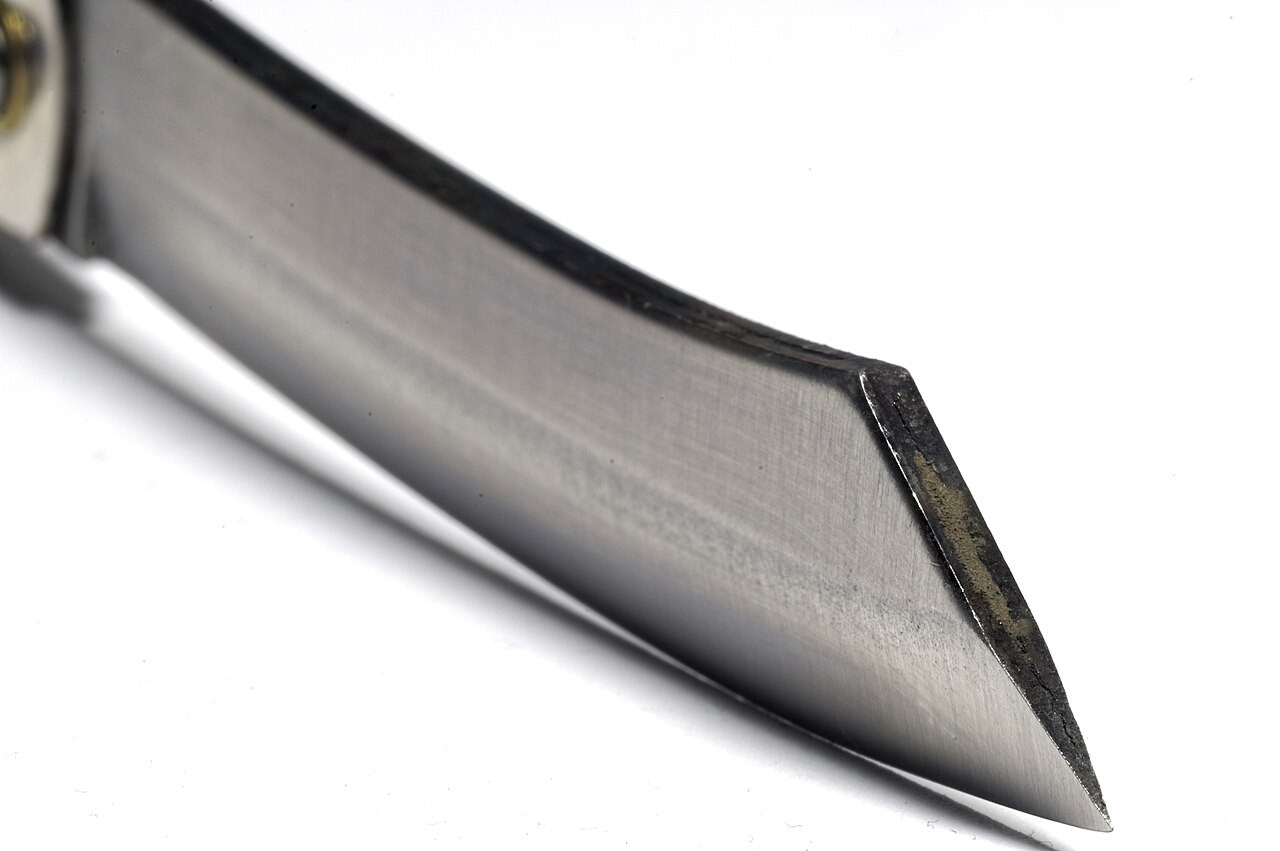
It is light. Lighter than one expects. The brass handle is thin, almost fragile in appearance. The blade pivots freely, held only by the friction of the metal. No stop notch, no spring, no mechanism. You open it with the chikiri, that small tab that protrudes from the back. You lock it by pressing your thumb on the back of the blade. That’s it.
Three steels to choose from. The Shirogami - white steel - offers exceptional sharpness but rusts if forgotten. The Aogami - blue steel - holds its edge longer. The VG-10, stainless, is the concession to modernity, with a chrome handle and a screw lock that somewhat betrays the original purity.
Enthusiasts favor the carbon steel versions. The sharpness is remarkable, sharpening is easy, and the patina that develops over time is part of its charm. Reservations concern expectations - the brass marks, the blade rusts if not maintained, the friction mechanism confuses those accustomed to modern locks.
The price is debated, but in a good way. Many are surprised that a handmade Japanese knife can cost so little. The question is not “is it expensive?”. The question is “how is it possible at this price?”.
What remains
A man in a workshop. Steel bars, brass plates, a grinding wheel. Five to eight knives a day. The same design since 1894. The same gesture for five generations.
The Higonokami is not a collector’s item. It is a tool. A tool that costs the price of two coffees in Tokyo and lasts for decades. An object of such radical simplicity that it cannot be simplified further. A blade, a handle, friction. The zero degree of the folding knife.
Mitsuo Nagao is over seventy years old. Every morning, he opens his workshop in Miki and forges Higonokami. When he stops, the last link with 130 years of tradition will be broken. The brand is protected, the gesture is not.
There is something dizzying about holding a fifteen-euro object whose history weighs more than a century. The Higonokami needs neither marketing nor storytelling. It needs to continue to be made.
For now, someone is still making it.