Independent Swiss Watchmaking on the Brink of Extinction
14.6 million watches shipped in 2025, a historic low in volume. In terms of value, the market holds steady: 25.6 billion francs in exports according to the FH. But this apparent prosperity masks a brutal reality: four private houses now capture 49% of total turnover. Independents, those who keep Swiss watchmaking diversity alive, are silently fading away.
The Report That Confirms the Obvious
The Morgan Stanley-LuxeConsult 2025 report on the Swiss watch industry was released at the beginning of the year. As every year, it ranks brands by estimated turnover. As every year, the same names sit at the top. But this edition has something definitive about it.
Four private brands (Rolex, Patek Philippe, Audemars Piguet, and Richard Mille) alone capture 49.1% of the industry’s estimated turnover, up 220 basis points year-on-year. If we consider the four largest brands overall (Rolex, Cartier, Audemars Piguet, Omega), we exceed 55%. Nearly half of the value produced by Swiss watchmaking is concentrated in just a few houses. In volume, the phenomenon is even more striking: Rolex produces about a million pieces per year. All the independents combined manufacture only a fraction of that.
Twenty years ago, the distribution was still relatively dispersed. Swatch Group, Richemont, and LVMH weighed heavily, certainly, but dozens of intermediate brands found their place. Today, the market has polarized. At the top, four or five brands capture almost all the growth. At the bottom, hundreds of small watchmakers share the crumbs.
The total number of watches exported has been steadily decreasing since the 2011 peak, when Switzerland shipped nearly 30 million pieces. In fourteen years, volume has dropped by more than 50% according to Morgan Stanley. But turnover, meanwhile, has increased. The average export price has climbed considerably. The market produces less, sells at higher prices, and concentrates gains into an ever-smaller number of hands.
The Anatomy of an Oligopoly
How did four brands come to dominate half of a market composed of hundreds of players?
The answer lies in three words: integration, rarity, desirability.
Rolex is a special case. A Geneva foundation, the most opaque company in the sector, it publishes no figures. But estimates converge: between 10 and 12 billion francs in annual turnover. Rolex owns its foundries, its dial workshops, its case machining facilities. It acquires its suppliers when they become strategic. It controls its entire chain, from gold alloy to bracelet clasp. No independent can rival this industrial depth.
Patek Philippe, still family-owned, plays a different tune: that of cultivated rarity. Approximately 70,000 watches per year. Waiting lists of several years. A secondary market where prices systematically exceed retail. Patek does not grow. It doesn’t need to. Its rarity is its business model.
Audemars Piguet bet on a single model - the Royal Oak - and developed it into a cultural icon. The result: over 2 billion francs in turnover, for an estimated production of 50,000 pieces. An average price exceeding 40,000 francs. The company, still owned by the founding families in Le Brassus, in the Vallée de Joux, has become a cash machine without ever needing external investors.
Richard Mille is the most recent phenomenon. Founded in 2001, the brand reached 1.5 billion francs in turnover by producing about 5,500 watches per year. Average price: almost 270,000 francs per piece. A positioning so extreme that it escapes competition. No one rivals Richard Mille because no one else has the network, the image, or the audacity to sell forged carbon watches at the price of an apartment.
These four houses have nothing in common - neither their history, nor their strategy, nor their clientele. But they share a decisive trait: they are independent of large groups. Rolex is a foundation, Patek is family-owned, AP is family-owned, Richard Mille remains controlled by its founder and his close associates. The groups (Swatch, Richemont, LVMH) no longer dominate the top. The ultra-powerful independents have surpassed them.
The irony is cruel: the independent brands crushing the market have made life impossible for other independent brands.
Those Who Fall
Purnell, a Geneva manufacture specializing in spectacular complications (spherical tourbillons, sculptural movements), declared bankruptcy at the end of 2024. The company had been founded in 2017 with the ambition of rivaling the great haute horlogerie makers. Seven years later, curtain.
Purnell is not an isolated case. It is a symptom. Independent watchmakers fall according to a recurring pattern: a passionate founder creates a brand, invests in a proprietary movement, presents their pieces at fairs, gets enthusiastic press, sells a few dozen watches a year, and exhausts themselves trying to find clients in a market where collectors are waiting for Nautilus and Royal Oak. After five, eight, ten years, the cash flow gives out.
The names accumulate. Hautlence, liquidated in 2018. Romain Jerome, bankrupt in 2020. MCT Watches, dissolved. Dewitt, bankrupt. Breva, stopped. ArtyA, erased. Each year, the list grows longer. Watch fairs - Watches and Wonders in Geneva, the former SIHH - are less and less populated by small brands. Booths are expensive. Media attention is monopolized by giants. An independent launching an 80,000-franc tourbillon goes unnoticed when Rolex unveils a new dial color.
The Impossible Equation for Independents
To survive as an independent in Swiss watchmaking in 2026, one must solve an equation that has almost no solution.
Costs are fixed and high. An in-house developed movement costs between 2 and 5 million francs in R&D. A compliant workshop, with qualified watchmakers, represents an annual fixed cost in the hundreds of thousands of francs. Components - hairsprings, escapements, rubies - are mainly produced by suppliers linked to large groups (Swatch Group owns ETA and Nivarox, which supply most of the industry). The independent is captive to its own suppliers.
The market is narrow. The clientele capable of spending 20,000 to 200,000 francs for a watch is global but limited. And this clientele is drawn in by highly renowned brands. A collector who hesitates between a Royal Oak and a MB&F creation will almost always choose the Royal Oak, because it is identifiable, because it resells well, because it means something at a dinner party.
Distribution is locked up. Multi-brand retailers are closing or converting to single-brand Rolex stores. Own-brand boutiques cost a fortune. Digital direct-to-consumer works for 5,000-franc watches, not for six-figure complications that require a fitting, a dialogue, a trust.
A few exceptions survive. MB&F, founded in 2005 by Max Büsser, has successfully built a profitable niche brand by playing the community card, transparency, and a radically creative positioning. F.P. Journe, a manufacture founded by François-Paul Journe and located in Geneva, has won over a base of fanatical collectors thanks to consistent quality and a deliberately limited production of around 800 to 900 pieces per year. H. Moser & Cie, after a daring family buyout, found an offbeat marketing tone and a loyal clientele.
But these survivors are the trees that hide the forest. For every MB&F, ten Purnell fade away into indifference.
The Vallée de Joux, Witness Territory
If one wants to understand what concentration does to the watchmaking fabric, one must go up to the Vallée de Joux, between Le Sentier and Le Brassus, a thousand meters above sea level in the Vaud Jura.
This is where Swiss watchmaking was born in the 18th century, in isolated farmhouses where peasants worked brass during the long winters. This is where Audemars Piguet, Jaeger-LeCoultre, Blancpain, Breguet, and dozens of subcontracting workshops have their manufactures.
For centuries, the Valley functioned as an ecosystem. The major houses provided work to small specialized workshops - anglage specialists, decorators, dial makers, engravers. Each operation had its niche. The whole formed a dense, resilient network, where know-how circulated from one workshop to another.
Today, large groups integrate vertically. They buy out their subcontractors or replace them with in-house workshops. The small independent suppliers in the Valley lose their orders. Some close down. Others retrain as service providers for the non-watchmaking luxury industry - jewelry, leather goods, automotive. The fabric is unraveling.
The population of the Vallée de Joux stagnates at around 7,000 inhabitants. Young watchmakers trained at the technical school find positions more easily at AP or Jaeger than in a small workshop. The aspiration of talent towards the top accelerates the drying up of the base.
An Intangible Heritage at Risk
The know-how in mechanical watchmaking and artistic mechanics has been inscribed on UNESCO’s Intangible Cultural Heritage list since December 2020, following a joint application from Switzerland and France. This recognition was supposed to protect these skills. In practice, it protects nothing. UNESCO does not prevent a manufacture from closing. It does not oblige a supplier to maintain its activity. It does not create clients for independents.
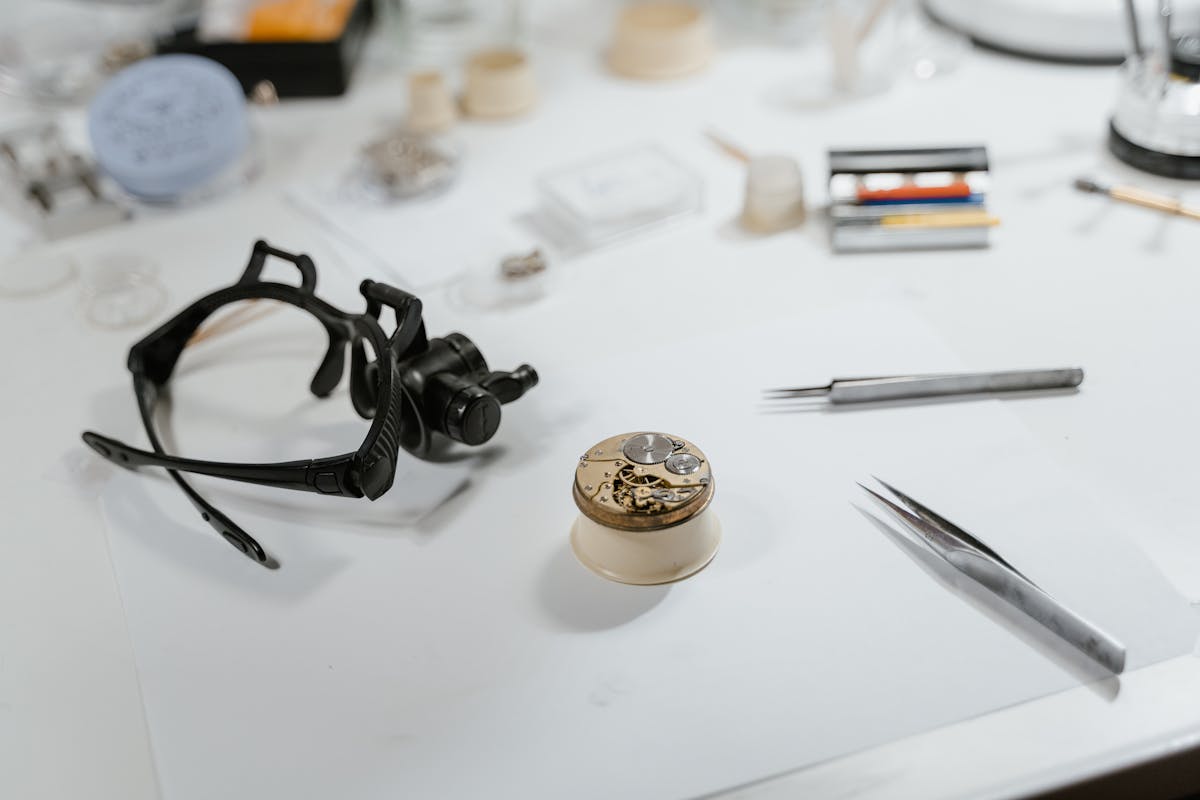
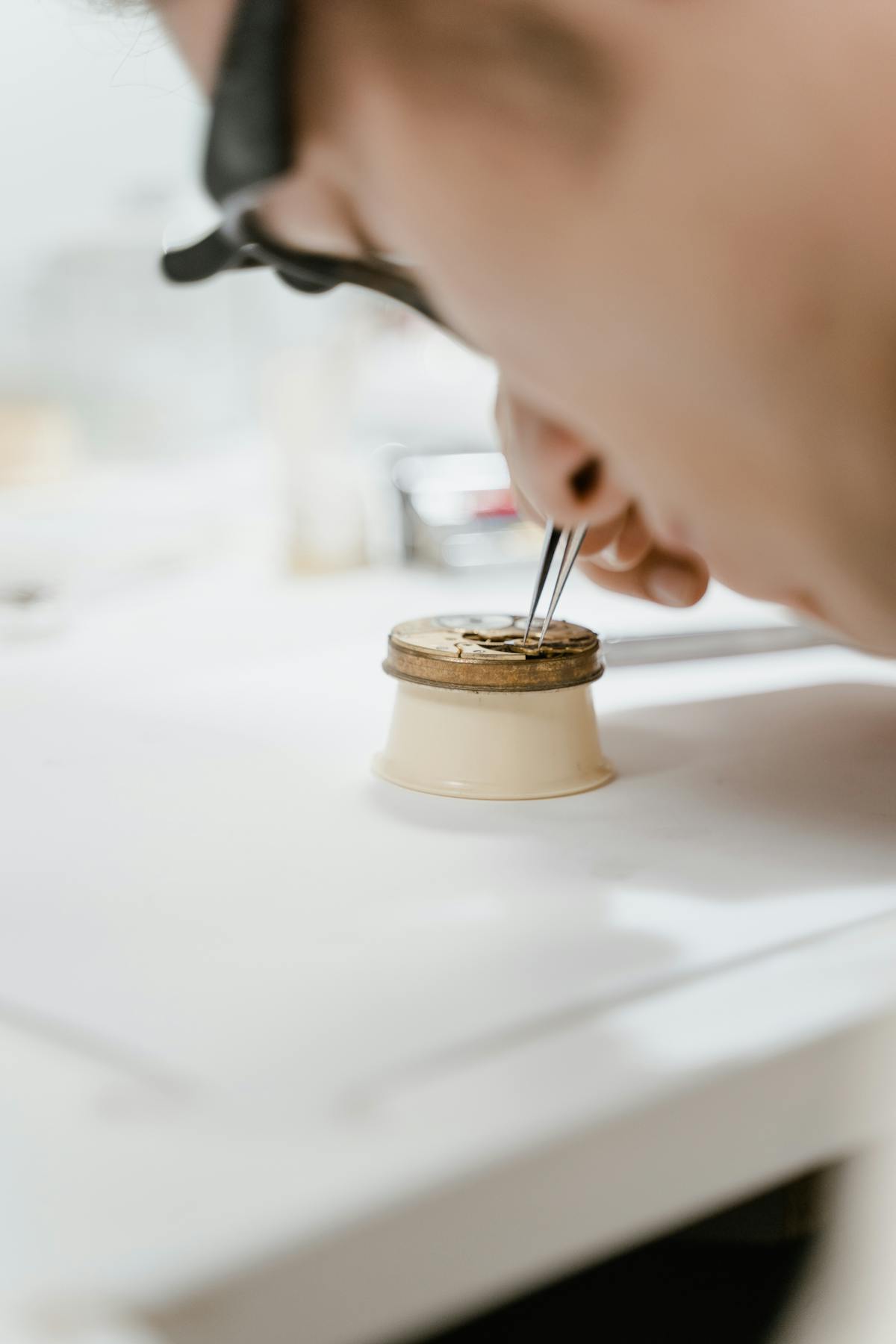
What disappears with each workshop that closes is not just a brand. It is a set of gestures, techniques, tacit knowledge that cannot be learned from a book. Hand-anglage - this mirror finish of movement components - takes years to master. Geneva decoration, Côtes de Genève, perlage: these are hand and eye gestures, passed from watchmaker to apprentice, which exist nowhere in codified form. When the watchmaker leaves, the gesture leaves with them.
The Federation of the Swiss Watch Industry (FH) still counts about 700 companies in the sector. But how many are truly independent? How many make their own movement? How many have the means to develop a complication? How many will survive the next decade of concentration?
The 2025 figures provide a clue. Exports in volume are decreasing. Prices are rising. The market is tightening around a few winners. The rest suffer.
The End of a Model
Swiss watchmaking will not die. It will transform. It is becoming what the luxury automobile industry already is: a sector dominated by a few totem brands, where the independent exists only as a marginal curiosity, as a culturally tolerated but economically insignificant exception.
Watches will continue to emerge from Swiss workshops. They will be more expensive, better finished, more desirable. But the diversity that made this industry so rich - this ability to generate, generation after generation, artisan-inventors who created impossible mechanisms in ten-person workshops - that diversity is fading away.
When the Morgan Stanley 2030 report is released, four brands may capture 60% of the market. The Vallée de Joux will still be beautiful. The watches will still be precise. But something will have disappeared that no report measures: the very possibility of creating something new, unexpected, independent, in a watchmaking world that tolerates only power.
14.6 million watches. And each year, fewer hands to assemble them.